

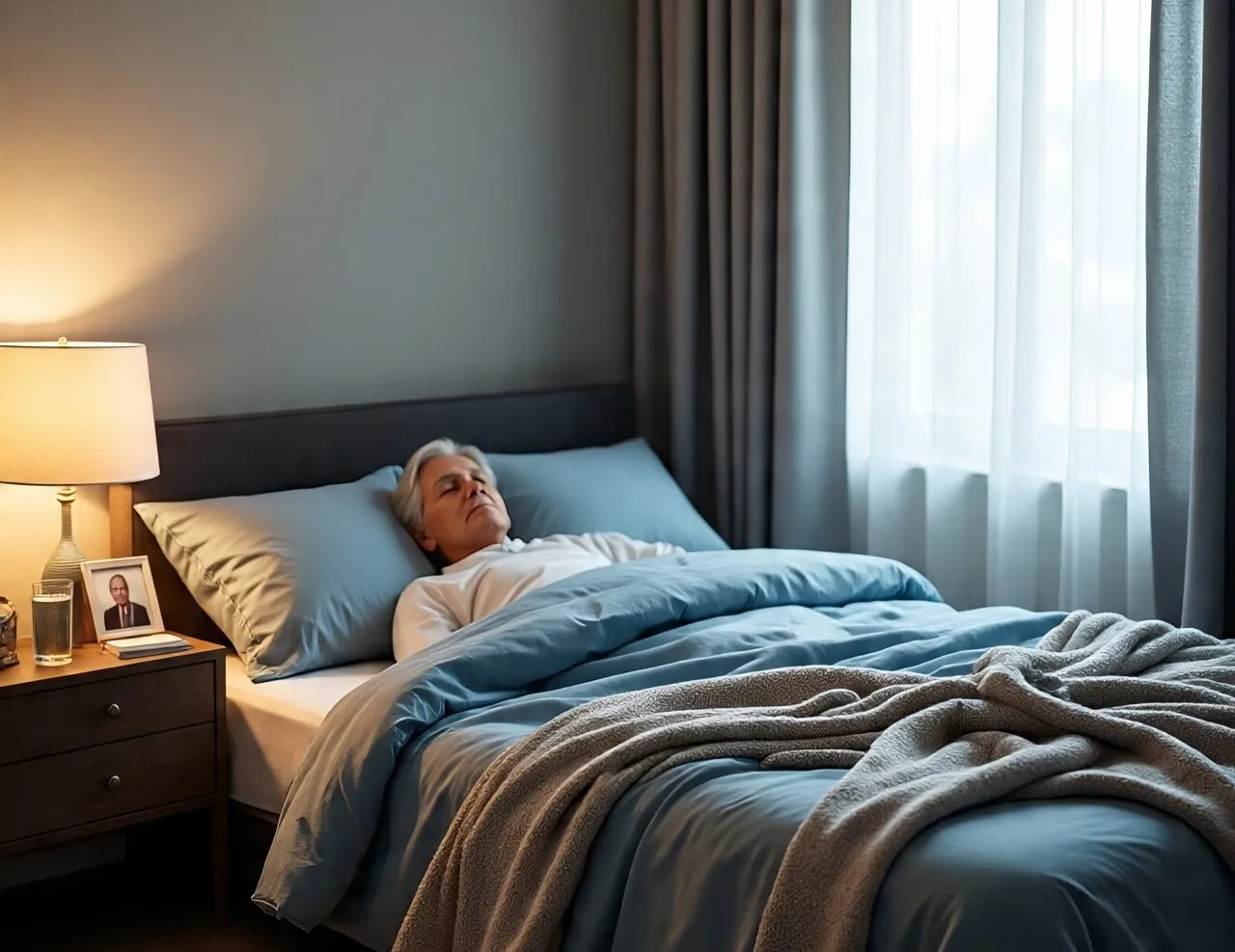






Insomnia is defined as the inability to fall asleep, the inability to stay asleep or waking up earlier than desired. In order to have a clinical diagnosis of insomnia the patient must have an adequate sleep opportunity and adequate sleep environment. The sleep disturbance must also have an impact on their quality of life by causing any of the following: fatigue, impaired cognitive performance, mood disturbance, daytime sleepiness, behavioural problems, reduced motivation, proneness for errors or worry about sleep. Insomnia is categorised as chronic if it persists for more than 3 months and short term if it has lasted fewer than 3 months. The most recent International Classification of Sleep Disorders no longer emphasizes previously distinguished insomnia subtypes or insomnia comorbid with mental or medical disorders. Even when insomnia is related to another condition, treatment of the comorbid condition often doesnt cure the insomnia.
Sleep and Aging
The quality of our sleep often deteriorates as we age. People tend to sleep less and are prone to more waking episodes after initially falling asleep. Sleep latency – the time it takes to fall asleep – may also increase. Some studies suggest that, beginning in middle age, the average person loses 27 minutes of sleep per night for each subsequent decade.
These decreases in sleep quality and duration are tied to the body’s internal timekeeping systems. The body cannot process circadian signals as efficiently, which in turn may cause older people to go to bed and wake up at earlier times.
Our sleep architecture also changes as we age and seniors are more susceptible to waking episodes during the night and also affects how refreshed and alert they feel in the morning.
Epidemiology
Insomnia is a highly prevalent sleep disorder, affecting upto 10% of young adults and increases to about 30% to 48% in those older than 65 yrs. The prevalence of insomnia is higher in older adults, which is likely due to age related reductions in sleep efficiency and the accrual of comorbidities that are associated with insomnia.
Comorbid psychiatric conditions increase the likelihood of developing chronic insomnia. Depression is perhaps the most common and strongly associated mental illness with insomnia. Anxiety is also a risk factor for developing insomnia.
A wide variety of medical problems are associated with insomnia. Epidemiologic evidence shows a greater prevalence of insomnia in hypertension, heart disease, arthritis, lung disease, gastrointestinal reflux, stroke and neurodegenerative disorders, to only name a few. Symptoms of medical illnesses that can disrupt sleep include pain, paresthesias, cough, dyspnea, reflux and nocturia.
Many medications can impair sleep or change sleep architecture. if stimulating medications (eg caffeine, sympathomimetics, bronchodilators, activating psychiatric medications) are taken too near to bedtime, sleep can be disturbed. Furthermore, sedating medications can lead to daytime sleeping which often decreases the ability to sleep at night.
Late- life insomnia is often a long- lasting problem. One study showed that a third of older patients had persistent severe insomnia symptoms at 4- year follow up. Among women older than 85 yrs, more than 80% reported sleeping difficulties, with many using over-the-counter (OTC) sleeping medications. Lastly being a caregiver for others, which often occurs later in life, is a contributing factor to the development of insomnia.
Causes:
- Predisposing factors: are a vulnerability to insomnia which may include anxiety, depression, or hyperarousal.
- Precipitating factors: these are triggers for insomnia such as loss of a spouse, retirement, moving to a new home, or any other sort of stressor.
- Perpetuating factors: these are maladaptive habits or beliefs that the patient has acquired to deal with the insomnia such as spending long periods in bed or taking naps.
Clinical presentation and evaluation:
Many patients do not talk to their doctors about their sleep complaints. The presence of insomnia may be revealed by eliciting self-medication with over- the- counter therapies or alternative sedatives. A careful sleep history and evaluation is conducted in order to assess whether there are comorbid sleep disorders such as Sleep disordered breathing (SDB), underlying the sleep disturbance The presence of undiagnosed OSA is common in those with insomnia.
PSG and other sleep studies are obtained if a comorbid sleep condition is suspected. Sleep diaries with daily entries over 1 to 2 weeks, with caffeine, alcohol and medication use noted can be very helpful in determining the severity of insomnia as well as identifying possible perpetuating factors such as irregular bedtimes or late night caffeine.
Sample Sleep diary
- Bedtime
- Time taken to fall asleep (after lights off)
- Number of nighttime awakenings
- wake up time
- Time out of bed (morning)
- Total sleep time (night only)
- Total wake time (night only)
- Nap time (if any)
- Medication (time/dosage)
- Caffeine/ Alcohol (time/dosage
- how was your sleep last night
- how tired were you in the morning
Management:
Behavioral and other non pharmacologic interventions: Behavioral treatment of insomnia is the recommended first line treatment for insomnia in all adults. Cognitive Behavioral therapy for Insomnia (CBT-I) usually combines sleep hygiene, stimulus control, sleep restriction and cognitive therapy.
Sleep hygiene is education on general practices to maintain a healthy sleep-wake routine.
Sleep hygiene rules for older adults: Check effect of medication on sleep and wakefulness; Avoid caffeine, alcohol and cigarettes after lunch; Limit liquids in the evening; Keep a regular bedtime- waketime schedule; Avoid naps or limit to 1 nap a day, no longer than 30 min; Spend time outdoors (without sunglasses), particularly in the late afterrnoon or early evening; Exercise- but limit exercise immediately before bedtime
Stimulus-control therapy is designed to break the negative associations patients have with their sleep environment.
Instructions for Stimulus-Control therapy for older adults:
- Patient should only go to bed when tired or sleepy
- If unable to fall asleep within 20 min, patient should get out of bed (and bedroom if possible). While out of bed, do something quiet and relaxing
- patient should only return to bed when sleepy
- if unable to fall asleep within 20 min, patient should again get out of bed
- behaviour is repeated until patient can fall asleep within a few minutes
- patient should get up at the same time each morning (even if only a few hours of sleep)
- naps should be avoided.
Sleep restriction therapy was developed from the observation that many patients with insomnia spend a large amount of time in bed unsuccessfully attempting to sleep. It is guided by the patient’s sleep diary.
Instructions for sleep restriction therapy for older adults
- calculate the average amount of time asleep per night reported by patient
- patient is only allowed to stay in bed for this amount of time plus 15 min.
- patient must get up at the same time each day
- daytime napping should be strictly avoided
- when sleep efficiency has reached 80%-85% patient can go to bed 15 min earlier.
- this procedure should be repeated until patient can sleep for 8 h (or period needed for a good night’s sleep)
There are several small studies that have found a beneficial effect of bright light, either from natural sunlight or light boxes on the sleep of older adults.
If these non-pharmacological interventions are not effective, then the doctor may consider sleep medications. Choosing appropriate insomnia medication for elderly patients requires a lot of care and consideration. Some medications, such as benzodiazepines (BZDs) and non-benzodiazepines (Z-drugs), produce hypnotic effects and can increase the risk of falling for older people. These drugs also carry a high tolerance, dependence, and withdrawal risk, and patient’s other prescriptions are also taken into account in order to prevent negative drug interactions.
Other insomnia medications carry lower risks, but they should still be prescribed with caution. Some medications promote sleepiness by interacting with natural hormones in the body. These include an agonist for receptors of melatonin, a hormone produced in the pineal gland that induces feelings of sleepiness after the sun goes down; and dual orexin receptor antagonist, which suppresses orexins, neuropeptides that causes feelings of arousal and wakefulness. Over-the-counter antihistamines may also be prescribed.
Dr Murassa Shamshad, Geriatric Specialist, Deptt of Health, J&K