

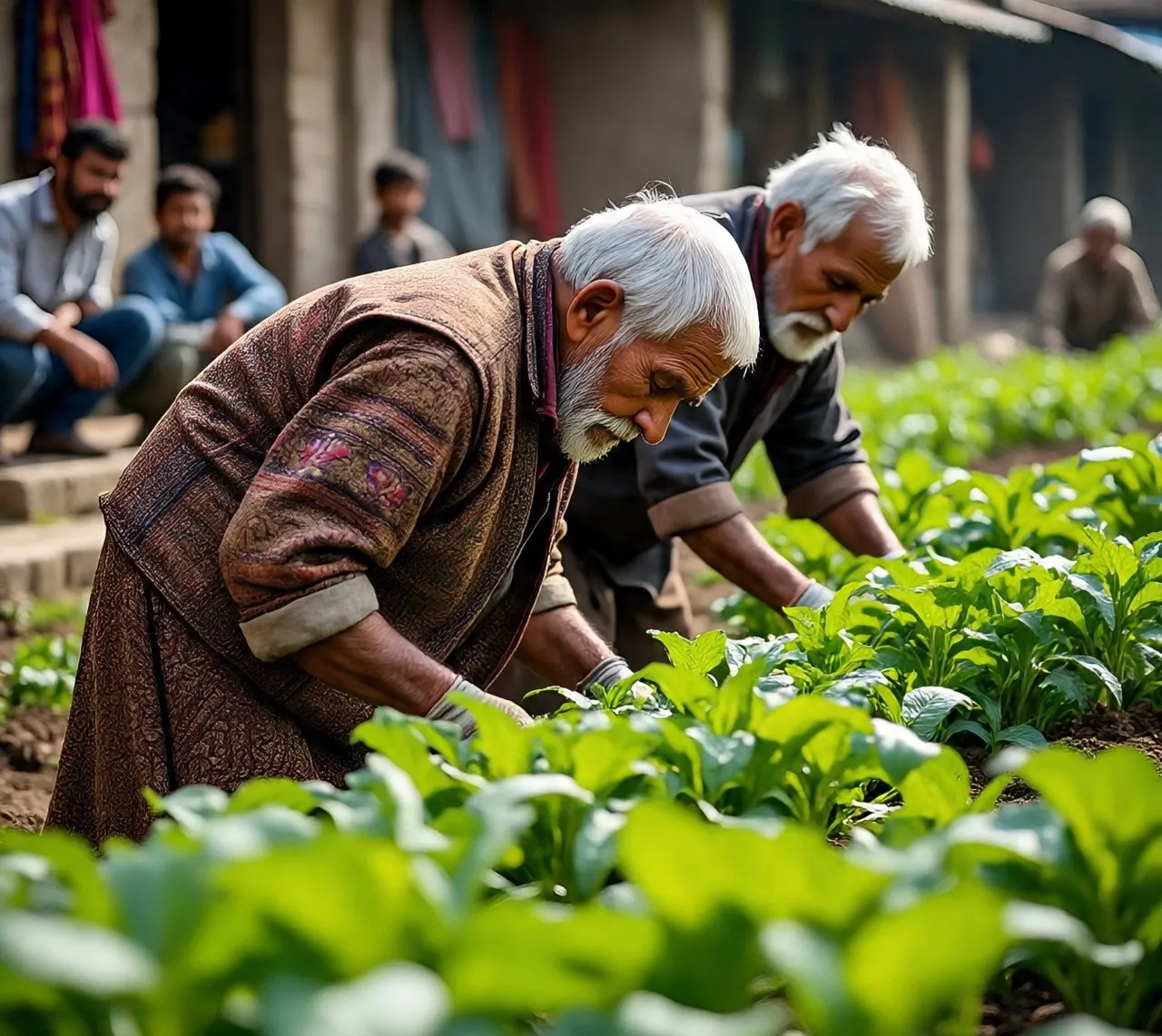






In the quiet, mist-laden mornings of Kashmir, a distressing sight has become increasingly common—one that defies the traditional social contract of the region. As the first light hits the chinars, it is not the vibrant, muscular youth who are rushing to the marketplaces or orchards to secure the day’s bread. Instead, it is the septuagenarians. With trembling hands, weathered faces, and backs bent by decades of labor, these elderly men—who should rightfully be resting on prayer mats or sharing stories in the warmth of the hamam—are heading out to work.
Behind them, in the houses they continue to sweat for, lies a troubling reality: grown men in their late twenties and thirties, physically capable and mentally sharp, remain fast asleep or glued to digital screens. This is the silent epidemic of generational inertia, a social crisis that is eroding the foundation of the Kashmiri family structure and leaving an aging generation in a state of perpetual, silent suffering.
The inversion of the social contract
Culturally, the Himalayan valley has always functioned on a simple, unwritten pact: parents sacrifice their youth to nurture and educate their children, and in return, as the parents enter their twilight years, the children take over the mantle of financial responsibility. This transition is supposed to be the “golden period” for elders—a time for spiritual reflection and community engagement. However, this cycle has been violently disrupted. We are witnessing a phase where the “ultimate onus” of survival never shifts. The octogenarian father remains the primary breadwinner, while the thirty-year-old son remains a perpetual dependent. This isn’t just an economic failure; it is a profound psychological burden. These parents suffer in a “double bind”—they are physically exhausted by labor their bodies can no longer sustain.
The Culture of the Culvert and the Digital Screen
Walk through any Kashmiri village or urban colony during peak working hours, and the symptoms of this malaise are visible. You will find groups of able-bodied youth huddled on road culverts or perched on shop pickets. The air is thick not with talk of enterprise or labor, but with aimless gossip and the blue light of smart phones. The digital revolution, while a boon for many, has become a sanctuary for the idle. For a significant portion of our youth, the virtual world has become a replacement for the physical hustle. This “gossip culture” at shop fronts acts as a social sedative; when everyone around you is equally unproductive, the individual shame of unemployment or idleness is diluted.
The looming sustainability crisis
The question that keeps these elderly parents awake at night is simple yet haunting: How will this family sustain in the long run? The current model is built on “depleting assets.” The elderly are spending their final reserves of health and savings to keep the kitchen fires burning. When these “grey-haired pillars” inevitably fall, there is no foundation left. The lack of financial activity among the youth means there are no savings, no investments, and, more importantly, no work ethic being developed. We are heading toward a future where a significant portion of our population will reach middle age without ever having held a steady job, leaving them utterly ill-equipped to handle the complexities of a modern economy.
The tragedy of inherited poverty
The crisis reaches its most heart-wrenching peak when these idle men get married. Under social pressure or the hope that “marriage will make him responsible,” families enter into alliances they cannot afford. The result is often catastrophic. When a man in his thirties cannot provide the basic necessities—food, medicine, or hygiene—for his spouse and offspring, the domestic environment turns toxic. It leads to depression, domestic friction, and a sense of hopelessness that is passed down to the next generation.
Breaking the Silence
The “silent suffering” must end, and that begins with a difficult conversation within our society. We must address several factors:
- The dignity of labor: somewhere along the way, we developed a disdain for “small” jobs. Many youth wait for a government “order” that may never come, refusing to engage in agriculture, craftsmanship, or local trade. We must re-instill the idea that any honest work is better than idle dependency.
- Parental tough love: while the empathy for parents is paramount, there is also a need for a shift in parenting. Shielding a thirty-year-old from the realities of the market is not an act of love; it is an act of long-term sabotage.
- Community intervention: religious leaders and village elders must use their influence to discourage the “culvert culture.” The platforms of our mosques and community centers should be used to talk about the religious and social obligation of a man to provide for his family.
Dr. Mushtaq Rather is an educator