

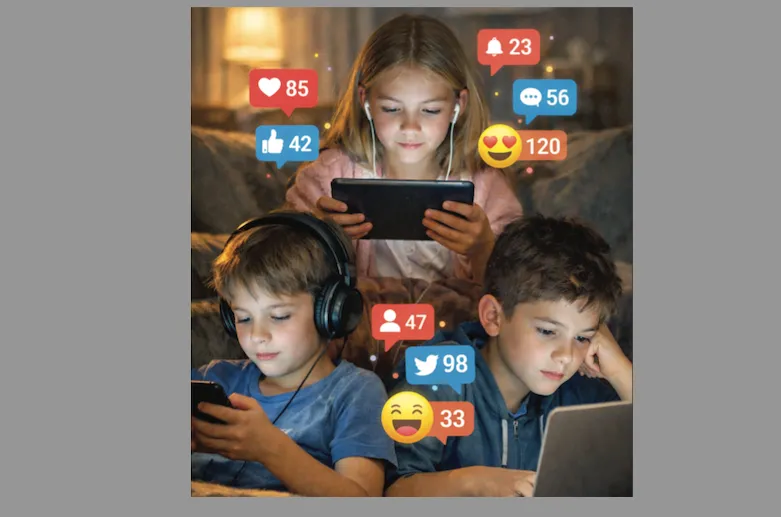






Time no longer feels the way it once did. Days rush past, weeks blur together, and despite being constantly busy, many of us feel disconnected from our own lives. This is not merely a personal feeling it is a cognitive shift.
Scientists suggest that our perception of time is changing as the brain is continuously bombarded with information. Notifications, updates, and digital noise push us into constant multitasking. Psychologists describe this as ( time compression) when experiences come too quickly and without depth, the brain fails to store them properly, making time feel shorter in retrospect.
We scroll, click, consume, and move on, yet little truly stays with us. In contrast, childhood felt expansive. A single afternoon could seem endless because attention was undivided. We noticed sunlight, sounds, pauses between moments. That attention stretched time, giving life texture and meaning.
Neuroscience now confirms that time perception is closely linked to focus. When attention is scattered, time collapses. When we are fully present, time expands. This is why mindfulness (being deeply engaged in the moment) is no longer just a wellness trend, but a neurological need.
In a region where life has often been shaped by uncertainty and waiting, the feeling of time slipping away carries particular weight. Perhaps reclaiming time does not require slowing the clock, but slowing ourselves. choosing presence is an act of resistance. When we learn to pay attention again, time does not disappear it quietly returns.
Saniyari Magray, participant GKSC Bootcamp, Batch 4.