







I am forced to look back at Kashmir of 1990, and wonder what all it has done to itself now when the first quarter of the 21st century is about to usher in. Let me clear at the outset that I am not a Kashmiri, but always considered and believed myself as an adopted son of the Vale that cradled my childhood in south Kashmir’s town of Anantnag.
That was the time when springs overflowed, Jhelum zigzagged in its natural course, but often flooded the town from Lal Chowk to Khannabal and beyond. Sheikh Abdullah was behind bars but his calls echoed all across. There was unequal contest between slogans calling for “Plebiscite” and “Azad Hindustan Zindabad”. It was perplexing. I used to wonder, why should it happen when the country is fully free and sovereign. It was a narrative that India was a free country where everyone was equal. It also meant that Plebiscite was an illusion, and ultimately it has proven correct.
It may not fit into the imagination of many of this age that the news was broadcast through a loudspeaker fitted at Lal Chowk, Mattan Chowk and few other crossings in the town. We learnt about the death of President Zakir Hussain from that loudspeaker which served as an amplifier to Radio Kashmir, Srinagar, broadcasts. Perhaps this was to pierce each and every home in the vicinity, and drown the noises of dissent.
The town represented crossroads at which Kashmir was at that time.
There was an unquenchable quest for identity. Kashmiri Muslims and Hindus had serious differences over the political development. The intellectuals would argue endlessly without ceding the ground, but there was no bitterness or any iota of hate.
Looking back at those times, and later to 1990, Kashmir is not what it used to be. Unfortunately, the whole prism of looking at Kashmir is through 1990s, when militancy erupted and Kashmiri Pandits had to flee their homes as they were faced with tidal waves of secessionism and unending cries of “Azadi” . The select killings made the country to think that they better flee the Valley than stay in the perpetual atmosphere of hostility. An anti-India ecosystem had taken shape, leaving no scope for the Indians to breathe easy.
By 1990n Kashmir was losing all its charm. It was a dreaded place where guns and bombs dictated life. That was my second introduction with the Valley – the first being in 1964 when my father was posted in Government Degree College, Anantnag. The winter of 1960s, though harsh, was pleasant and the summer of 1990 was full of fear and scare.
What all has been achieved in the last 36 years?
This question has many answers. In 1990, the Kashmir narrative was subjugated to forces of violence. Kashmiris did not like violence, then how come that hundreds of youth went to Pakistan and returned trained in the acts of subversion. They were addressed with respect. Even the victims of terror refused to speak against them. The changed lifestyle – Srinagar city used to become ghost town by afternoon, racing to safety after explosions, rattle of bullets in each and every hit and run shootout was taken as normal. Phones – land lines – were new lifeline. It was near death experience when these devices went lifeless cult to hear from the loved ones. We have relied on easy and convenient answers – the rigging in 1987 polls, but is that all? No attempt was made to decode the cumulative pain and anger.
Today we have smart phones, capturing life in its reality with a potential morph and edit selectively to change the whole reality. It has happened everywhere, but why does it matter in Kashmir more than any other place in the country? It is because it has the grim potential to derail things, indoctrinate the impressionable minds . They enable the newer generations to the history of turmoil of their land in 1990s. This is where no counter-device or narrative can work unless the issue is addressed thoroughly. It leads to learning of child psychology and applying it with the same sensitivity. Don’t force an idea, let the children develop their own understanding and responsibility. Here, I am not talking about the children of the school going age. This is about all ages. All Kashmiris have child’s heart in them, there is a need to discover it.
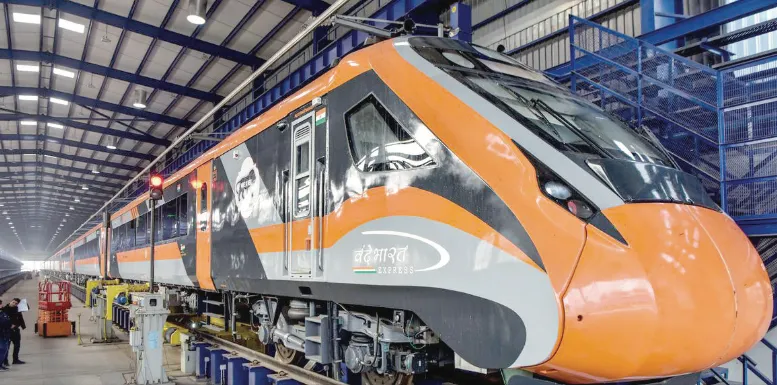
On June 6, 2025, when Vande Bharat train was flagged off from Katra to Srinagar, school children were excited. There was thrill in their voice, though some were tutored to say particular things yet the childhood prevailed. What is the story of the train, and how it has fulfilled million dreams. Children know what they were experiencing. They had seen experiencing the train ride through world’s highest rail bridge across river Chenab. This experience is beyond words. They became narrators of their experiences. Vande Bharat, in itself was both symbolism and operational reality of rising India. It formed part of the soft power doctrine.
Did we urge them to narrate their experiences and feeling to their parents, teachers and neighbourhood. No. We didn’t do that. For us this was a marvellous engineering marvel and covering distance of days in few hours. Its speed and looks mattered more than the larger canvas of harmony and connect.
An effort is needed to elicit the real feelings, sense of elation, make them partners in the achievement. It was their dream to scale the heights – the metaphor of Chenab Bridge, taller than Eiffel Tower of Paris can prove useful. This can trigger train of thoughts and positive influences that our nation stands at higher pedestal than others in the world. It is all about child care.
Kashmir is a child. It needs that care. Train journeys through all seasons are like taking care of the child waiting to board the train. Assist Kashmir to board the train into 2026. It has to be done in reality. Prime Minister Narendra Modi did that on June 6, 2025, now it is the responsibility of all others to take it into 2026 onwards. Let this train also take Kashmiri Pandits back to their homes. This train runs on the track of connectivity , emotional, political and economic. But it is essentially a journey of stream of consciousness which will help decipher the journey to destination where mind is free and aligned to the idea of India on its own.