

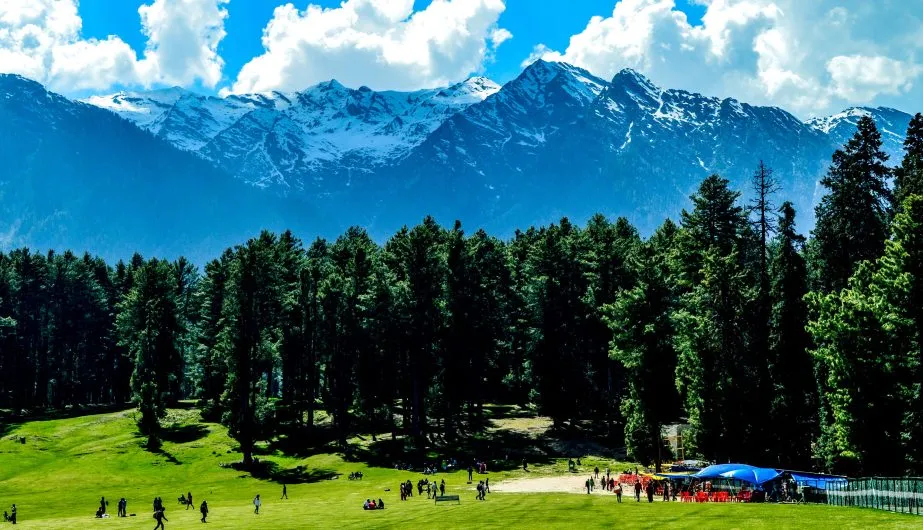






Srinagar, Dec 30: Baisaran was meant for postcards, not obituaries.
On April 22, gunfire tore through the meadow and through Kashmir’s fragile calm.
The killing of 26 tourists in Pahalgam marked a brutal shift in Kashmir’s conflict, triggering security escalations, public outrage, and the collapse of a hard-won tourism revival, reshaping 2025 into a year defined by fear, fallout, and fractured stability.
The calm that Jammu and Kashmir had cautiously rebuilt in recent years was violently shattered on April 22 when terrorists carried out the deadly attack on tourists in Baisaran near Pahalgam, one of Kashmir’s most popular scenic destinations.
The assault, which claimed 26 lives, emerged as the deadliest civilian-targeted terror strike in Kashmir in decades, sending shockwaves across the country.
The attack not only raised serious concerns over security and communal harmony but also dealt a severe blow to Kashmir’s economic recovery and tourism-led revival narrative that had gained momentum after 2019.
While Kashmir had witnessed a relative decline in major terror incidents following the abrogation of Article 370, low-intensity conflict persisted in the form of sporadic encounters, infiltration attempts and targeted killings.
However, the April 22 Pahalgam attack stood apart for its scale, symbolism, and impact, marking a shift in terror tactics towards high-profile tourist targets.
Baisaran Meadow, often dubbed ‘Mini Switzerland,’ lies around 5 to 7 km from Pahalgam town in south Kashmir’s Anantnag district and is accessible only on foot or by pony.
Between 1 pm and 2:45 pm on April 22, armed terrorists reportedly emerged from surrounding forests and opened indiscriminate fire at tourists.
Survivors said that the attackers identified victims based on religious identity, selectively targeting men while sparing women and children in some instances.
In all, 25 tourists and one local were killed, while more than 20 others sustained injuries.
Security forces launched an extensive counter-terror operation codenamed ‘Operation Mahadev’ to track down the perpetrators.
By July 28, the government announced that those responsible for the carnage had been eliminated in encounters in the Dachigam forest area near Harwan.
The Pahalgam massacre triggered intensified counter-terror operations across Kashmir, along with heightened security along the Line of Control (LoC).
In May, the Indian Army carried out cross-border strikes, referred to as ‘Operation Sindoor’, targeting terror infrastructure across the border.
The fallout was felt sharply in border districts like Poonch, Rajouri, Kupwara, and Baramulla, which witnessed heavy shelling in subsequent days.
At least 20 civilians were killed, over 2000 structures were damaged, and dozens of schools were destroyed.
For the first time in over three decades, spontaneous protests erupted across Kashmir, condemning the attack.
Protesters across towns and villages raised the slogan ‘Not in my name,’ signalling widespread public rejection of violence.
Tourism – one of the main pillars of Kashmir’s economy – suffered its worst setback in years.
Kashmir had recorded a strong start to 2025, with an estimated 5 to 8 lakh tourists visiting in the first quarter, driven by attractions such as the Tulip Garden.
That momentum collapsed overnight.
Thousands of tourists fled immediately after the attack, with special flights arranged for evacuation.
Booking cancellations crossed 13 lakh by August, and tourist footfall dropped by more than 50 percent in the first half of the year compared to 2024.
Nearly 50 popular tourist destinations were shut on security grounds, hotel occupancy plummeted, and thousands of workers – pony operators, guides, shikara owners and hotel staff – were pushed into unemployment.
The ripple effects were felt across hospitality, transport, and handicrafts.
Beyond violence, Kashmir also grappled with natural and economic challenges, including disruptions to apple exports due to flooding and highway closures.
However, timely intervention by the Indian Railways helped transport produce to markets.
The launch of the Vande Bharat train connecting Kashmir with the rest of the country provided some relief, reducing travel time and costs and facilitating the movement of civilians, food supplies, and military equipment.
Yet, despite these interventions, 2025 will be remembered as a year when a single terror attack unravelled years of fragile stability, leaving deep scars on Kashmir’s security, economy and collective psyche.