

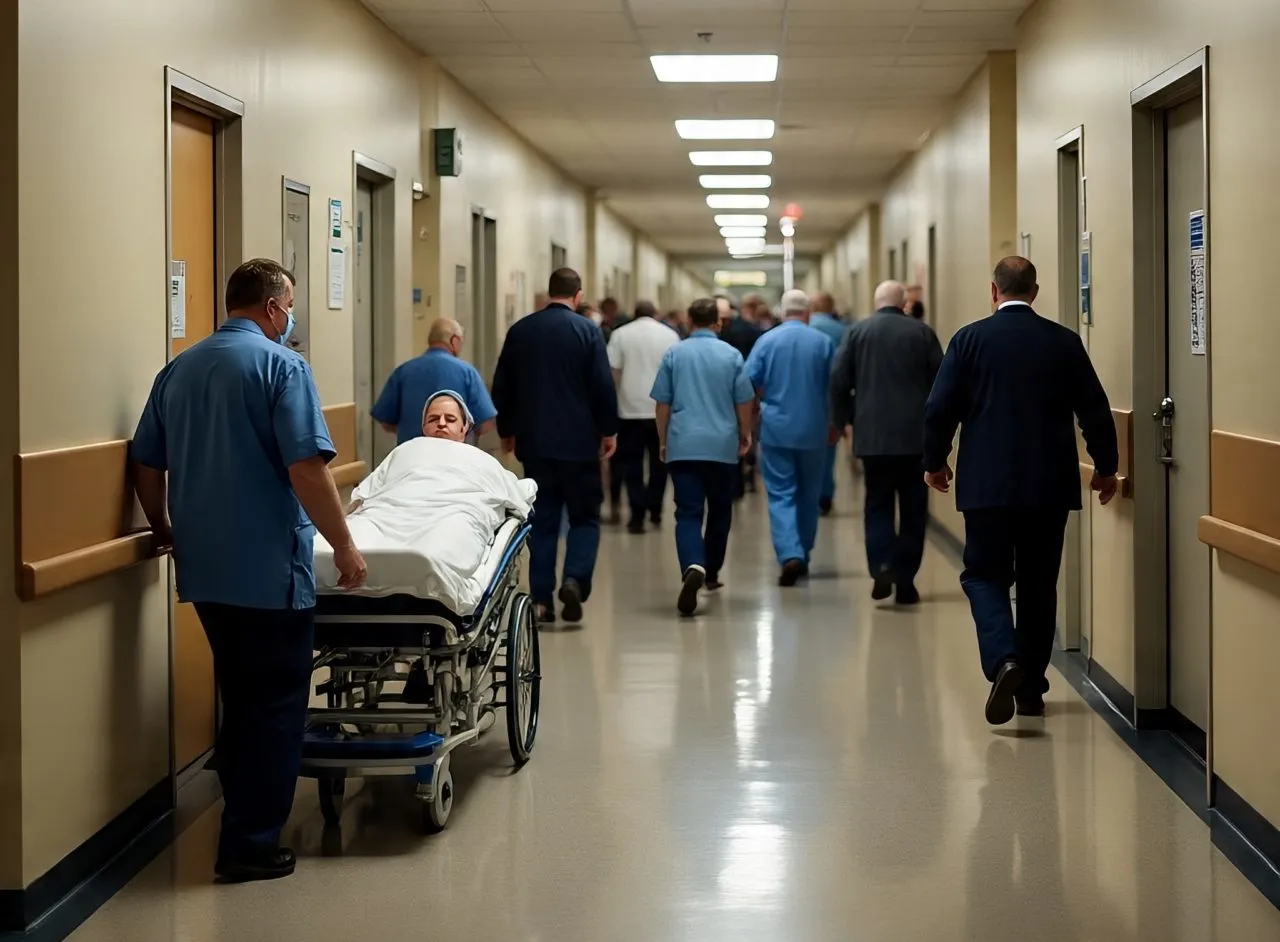






Srinagar, Dec 29″ In 2025, Jammu and Kashmir’s healthcare pulsed between promise and peril, saving lives one day, asking hard questions the next.
From unexplained deaths and reservation unrest to stalled hospitals, staff shortages, rising lifestyle diseases, and a stray-dog scare, J&K’s health sector spent the year firefighting crises while chasing long-delayed reforms.
MEDICAL MYSTERY
The year 2025 started with a medical mystery, the first of its kind, and perhaps still unsolved to a great extent.
The Budhal village of Rajouri district saw chilling deaths between December 2024 and January 2025, claiming the lives of 17 people, mostly children.
The deaths were preceded by fever, vomiting, dehydration, and brain edema, later attributed to ‘neurotoxins’.
What followed was quarantines, sealed homes, and a containment zone declaration.
Investigations ruled out infectious diseases, viruses, or bacteria, but forensic tests later revealed traces of toxic pesticides, including chlorfenapyr, in the victims’ bodies.
The source of poisoning was never revealed, and answers to how these people actually died continue to remain elusive for the families and the people.
RESERVATION ROW
Perhaps the hottest issue in the medical education sector this year was the demanded and anticipated changes to the J&K Reservation Policy.
With NEET-UG applications opening in February, the aspirants for MBBS and BDS seats, along with aspirants of other professional courses, pressed harder for the rationalisation of the share of Open Merit candidates.
The entire year took the aspirants of professional courses and job aspirants through a roller coaster.
The modified reservation policy document was finally submitted to Lieutenant Governor Manoj Sinha at the beginning of December.
However, the students and many political figures stood amidst a fresh storm, brewing from being stopped from lodging a protest against the reservation policy.
The modified policy has not been made public yet, the elected government stating that it needs clearance of the LG, who was in possession of the document.
INFRASTRUCTURE UPS AND DOWNS
On the infrastructure front, 2025 delivered a patchwork of advancements and setbacks in J&K’s healthcare infrastructure.
A few stalled initiatives finally moved, while others linger in limbo as we step into 2026.
AIIMS Kashmir at Awantipora is still no more than a few floors on a few pillars.
On the face value, it appears quite far from being in a position to start operations.
Although it is stated that the civic work is nearly 70 percent complete, the timelines for starting admissions and operations at the ambitious healthcare institute are fluid.
The Bone and Joint Hospital’s new block made operational this year, provided much-needed space for the hundreds of trauma and orthopedic cases at the hospital.
The maternity units in Anantnag and Kangan, plus trauma centres, remained as rudimentary as they have been for years.
Rural and difficult areas continued to endure access gaps.
Much respite is anticipated with the announcements that were made this year: Rs 124.83 crore infusion for CT at GMC Jammu, MRIs for Baramulla, Kathua, and Rajouri GMCs, a Cath Lab in Doda, and Kashmir’s second PET scan.
WORKFORCE WOES WORSE
With over 16,000 vacancies in J&K, 7000 of these in health, every hospital here is strained for staff, and this erodes the quality of healthcare delivery.
Sher-e-Kashmir Institute of Medical Sciences (SKIMS) operates at 40 percent of the staff that was sanctioned for it decades ago, for a load that is less than half of the present load.
The CHCs in Kashmir don’t have 104 of 220 specialists sanctioned, and there is no sign of these being available anytime soon.
These specialists include surgeons and pediatricians, diverting cases to urban hospitals and adding to the woes of the masses.
In May, 103 remote-area appointments were made, and just last week, 480 medical officer posts were referred to JKPSC.
The dismally poor nurse and paramedic ratios compounded chronic deficits in rural set-ups and in tertiary care, making outcomes of procedures nosedive.
These shortages continued to remain unattended and unaddressed.
The Health Minister termed the issue “a chronic sore” of decades.
SHIFTING DISEASE PATTERNS
J&K’s disease profile continues to be tilted toward NCDs.
Diabetes hit 18.9 percent (urban 26.5 percent), pre-diabetes 10.8 percent, and hypertension 27.1 percent.
Anemia affected 72.7 percent of under-fives.
Heart issues, strokes, and renal failures rose from a sedentary lifestyle.
Cancers rose with tobacco, pollution, and delays, making it worse.
Obesity, a chronic health issue in J&K, is a precursor to many ailments.
Studies have shown that 84 percent of people in Kashmir are inactive, having no physical activity to make their bodies fit.
Chief Minister Omar Abdullah was nominated by Prime Minister Narendra Modi as fitness ambassador for India, among a few others.
A few walkathons and marathons took place, yet J&K remains unmoved, literally.
MEDICAL EDUCATION EXPANSION
NMC has given a nod for one new college in J&K, but the location remains unclear.
In a year, 379 MBBS and 118 PG for 2025-26 were approved.
CANINE CRISIS
Stray dogs emerged as a rampant threat.
With 2.12 lakh bites since 2022, the threat is an immediate and desperate one.
Humane sterilisation drives have not taken off in a real sense, while Supreme Court directions on controlling and managing the dog population led to a spree of orders, which also created furore.