







Jammu, Dec 31: 2025 – the outgoing year kept all and sundry engrossed in the “shadow-boxing” in the political arena in Jammu and Kashmir – one of the most politically enlightened States and Union Territories of India, by all means and logic.
Real saucy moments came when, occasionally, even the gloves (of those engaged in shadow-boxing) were off!
Anyway, it was an unadulterated politicking – flowing from all sides that made political analysts and “the ruled” amused – throughout the year, except phases when terror, tragedy, calamities, and despair outweighed all other facets of life.
Though for the ruled, this game of persistent political one-upmanship brought moments of frustration as well when the expectations, aspirations, and anticipation met disappointment on a number of counts at different intervals of time.
Intense shadow-boxing actually started immediately after the 2024 assembly polls in J&K – maiden elections in the Union Territory setup.
Hence, 2025 had inherited it in legacy from 2024.
Statehood, business rules, dual power centre (and special status in the backdrop) formed the pivot around which key players remained engaged in (verbal) duels in 2025.
On anticipated lines, the ‘black hole’ had consumed resolutions on statehood (approved by J&K-UT cabinet in its maiden meeting) and on special status (passed by J&K Legislative Assembly in its maiden session), much to the chagrin of the newly elected ruling dispensation.
For the elected government, its first six months (including the first quarter of 2025) were a warm-up period. The opposition and the people, too, were generous. Criticism, even when it happened on any account, was mild.
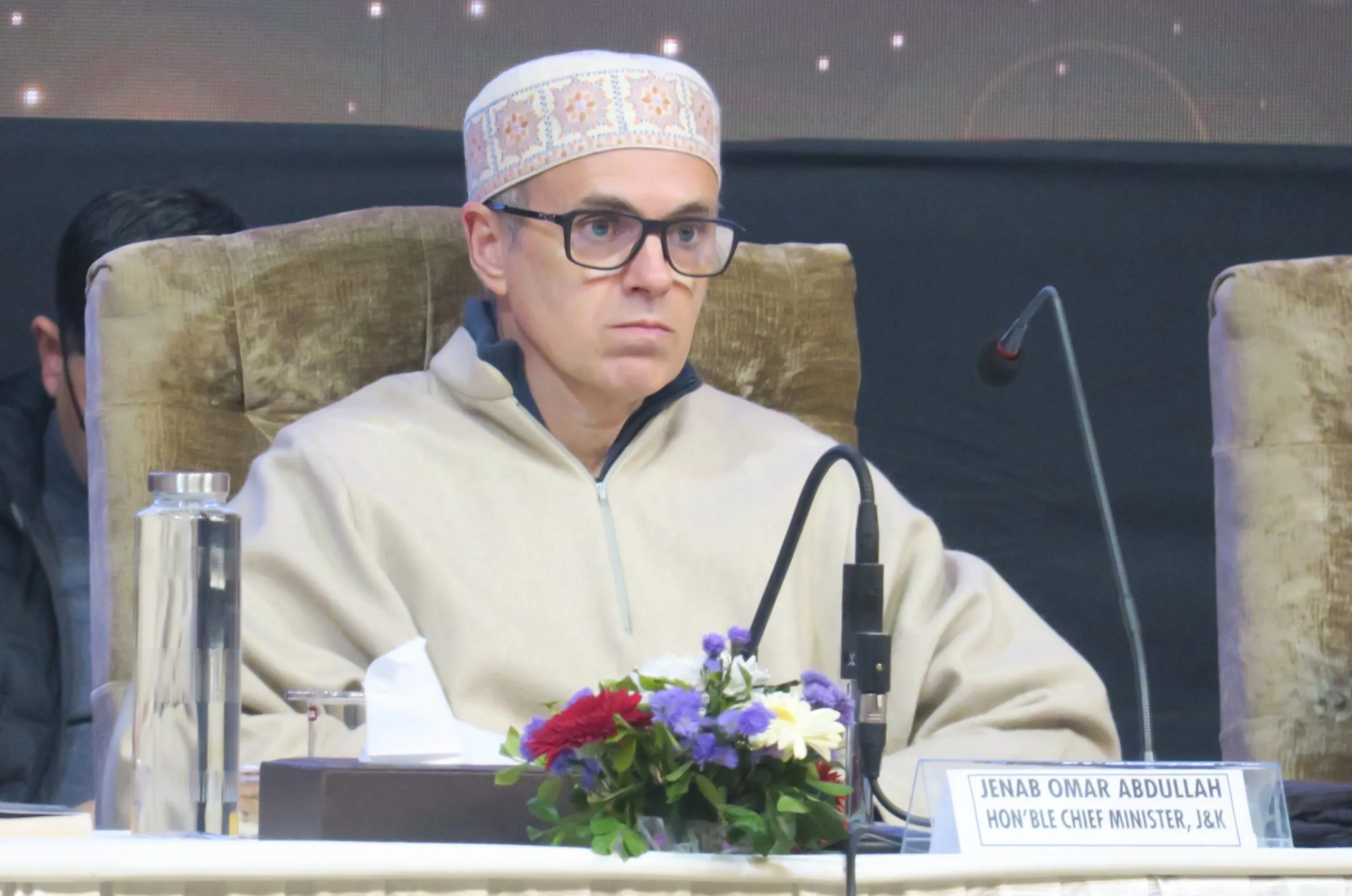
Therefore, the National Conference (NC) and mainly the Chief Minister Omar Abdullah too were restrained in registering their protests against what they would describe as “dual power centre – a disaster recipe for governance, more so for a sensitive territory like J&K.”
As and when they faced probing questions from any quarter for their performance, there were murmurs of protest in the NC camp about “no approval” to business rules or files related to various administrative decisions, which required mandatory clearance by the Lieutenant Governor in the UT set-up.
Interestingly, the alliance partner Congress played it as a “no-holds-barred” game while raising statehood, dual power centre issues, the NC, and mainly the Chief Minister generally avoided direct confrontation and mainly restricted themselves to oblique digs.
Reasons were not too far to seek.
Congress, which, despite being the National Conference’s pre-poll alliance partner, had opted to stay out of the government as its ally (NC) proved to be not very accommodating vis-à-vis its (Congress’) aspirations, had nothing to lose.
However, NC, being directly in power and wearing the shoe, knew exactly where it was pinching and where it would hurt.
Therefore, till the first quarter, NC office-bearers, spokespersons, and at the most, the Deputy Chief Minister were at the forefront in aiming barbs at the parallel power centre.
So far, the rest of the political parties, mainly the People’s Democratic Party (PDP), Peoples Conference, J&K Apni Party, thoroughly enjoyed the political antics and grumbling of their main rival party and many a time used the occasion to bruise it (NC) with their (political) punches as well.
On the other hand, the Bharatiya Janata Party naturally took upon itself the responsibility to defend the parallel power centre, which, so far, had avoided directly responding to any murmur related to dual power centre, statehood, or other related aspects.
The helmsmen, both at the Centre and at the Lok Bhavan, had restricted themselves to indirect references, sticking to their original positions.
With regard to allegations of “dual power centre”, the Lieutenant Governor stuck to his guns while remarking that he was only dealing with law and order, while the rest of everything was with the elected government, and it (the NC government) should focus on delivering what it promised.
In case of statehood, the central leadership too restricted itself to an “opportune moment” reply.
Media, for both sides, was the arena to aim barbs at each other – direct or indirect.
An interesting twist came during the maiden budget session of J&K in the UT set-up when the Chief Minister, along with his party colleagues and alliance partners, were engaged in direct verbal duels on these issues with the Leader of Opposition Sunil Sharma and other BJP MLAs.
As the year entered its second quarter, the gloves were getting off, and the voices were getting shriller. When the fence-sitters thought that probably direct confrontation was just around the corner, the Pahalgam terror attack, followed by Operation Sindoor, and then a spate of natural calamities, paused everything till the last quarter of the year.
However, the Pahalgam terror attack came as an opportunity for the NC, or for that matter, its all INDIA bloc partners to take a dig at the parallel power centre.
Chief Minister led the front, stating that the time was ripe to ask questions about chinks in “security, law and order” armour, which led to a terror attack.
In the last quarter of the year, as electoral activities gained momentum with the biennial Rajya Sabha elections in October and assembly by-polls in November, the references with punches became direct, and the gloves were almost totally off.
Another reason for the hot political scenario was that the Chief Minister Omar Abdullah-led government completed its one year in office on October 16, and it was facing direct heat from the punches of opposition and the people who were questioning it for its inability to fulfill its poll or budget promises.
NC defence came in the usual proposition – “non restoration of statehood (by the Centre) and no approval to business rules and files (by the Lok Bhavan)” were the hitches.
But the opposition, and mainly the BJP, were not willing to take it (proposition) as a valid excuse.
Meanwhile, the J&K BJP and the Leader of Opposition in J&K Legislative Assembly, in particular, continued to be the robust defender of the Centre and the Lok Bhavan with a standard one-liner – When they (NC) had promised, they knew they were going to govern a Union Territory.
However, in the pitched (political) battles, NC ensured the resumption of bi-annual Darbar Move practice (it’s another poll promise).
But the files related to issues of reservation and daily wagers could not find their way into the public domain, infuriating the concerned sections.
The polls to Urban Local Bodies (ULBs) and Panchayats continued to remain elusive in 2025 as well.
Admission row in Shri Mata Vaishno Devi Institute of Medical Excellence (SMVDIME) hogged the limelight as another political issue emerging as a “hot potato” in 2025.
In a slight deviation from politics, the year also saw J&K getting a new (38th) Chief Justice of the High Court of Jammu and Kashmir and Ladakh in Justice Arun Palli in April 2025.