







It’s time Jammu and Kashmir look back at what were called epoch-making Assembly elections of 2024, and the whole gamut of things that happened or didn’t happen since then. There can be a rational debate on the times and issues provided there is a fair and democratic approach in hearing the arguments and counter-arguments.
The 2024 Assembly polls were extraordinary in many respects: these were held after a gap of 10 years – the last were held in 2014 winters which gave birth to a new political alignment – BJP , an ultra-nationalist party joined hands with PDP, a Kashmir centric party that asserted the special rights of the people of the state. This was for the first time that the elections were held in J&K following the split of the state, downgrading to UT, and abrogation of Article 370.
This election was much beyond the status, time and space. This sought the validation of the abrogation of Article 370, and aimed at projecting a new Jammu and Kashmir for the international community where tourists had given a new phrase “hot spot of tourism”, replacing unwanted and unwelcome tag of being one of the major hotspots of terrorism in the world. The voters tuned on to new life – expressing their unwavering faith in democracy with the hope for good governance , ending all the troubles of the past.
It did matter to whom did they vote for forming the government. It demolished the myths that certain narratives could prevail against the will of the people. National Conference, the oldest party of Kashmir, was victor all the way, BJP, despite scoring better percentage of votes could not break the jinx of zero-victory in the Valley.
Indeed the electors were interested in listening to the leaders and their agenda, but they were interested in investing in their future. Polarising narratives that if NC comes, Jammu Hindus will suffer and if BJP comes to power, the nationalists will not be able to breath, however, could not curb aspirations for better future. The people voted for consolidation of peace with their involvement as primary stake holders, for which they gave mandate to their representatives. They were keener than ever before to march ahead with their undisputable Indian identity.
Prime Minister Narendra Modi had given a new meaning to the election campaign in Jammu and Kashmir. It was beyond the “ double-engine” government, it was a campaign for the Indian nationhood in the state that was torn apart by the secessionists and violent forces of terrorism. Terrorism had defamed not only the limited geography of J&K, but the entire nation. The international community used to taunt Delhi that it cannot resolve problem in its backyard. There were no effective answers until Modi decided to take certain bold decisions, bringing down walls of suspicion, and ushering in peace efforts with zero tolerance toward terrorism.
Much was achieved before the elections, and there was immense hope that more progress will be made with expansion of constituency of peace. Kashmir’s peace is answer to all the problems provided it is echoed by the people. There were many lessons to be learned. That all the bitterness and the narratives of polarization on regional, sub regional and religious line should be shut. The effort should have been to carry each and every one along, exchanging view points and developing thought process of unison for overcoming all the challenges and availing the new opportunities.
While hailing the peaceful conduct of polls and victory of National Conference, Prime Minister Modi had remarked: “I would like to compliment JKNC for their commendable performance in the Jammu and Kashmir Assembly election.” NC’s Omar Abdullah had thanked the Prime Minister and said that his party looked forward to a constructive relationship with the Centre.”
It was in this spirit that Omar Abdullah began his innings as the first Chief Minister of the Union Territory of J&K. It took him few days to understand that the things were far more difficult for the UT CM than all the troubles that he had faced during his tenure as the youngest Chief Minister of the State of Jammu and Kashmir ( January 5, 2009 to January 7, 2015). Now, everything had changed – here nothing was guaranteed , he had to rely on promises. The minimum hope was that till the time statehood returned to J&K he would have smooth sailing in administration, little realizing that the bureaucrats had aligned somewhere. The rule book had changed. That he had won the mandate to govern was not sufficient dawned him from the very start of his innings as CM on October 16, 2024. It was made plain to him that he is yet to win the confidence for becoming Chief Minister of State from that of the UT.
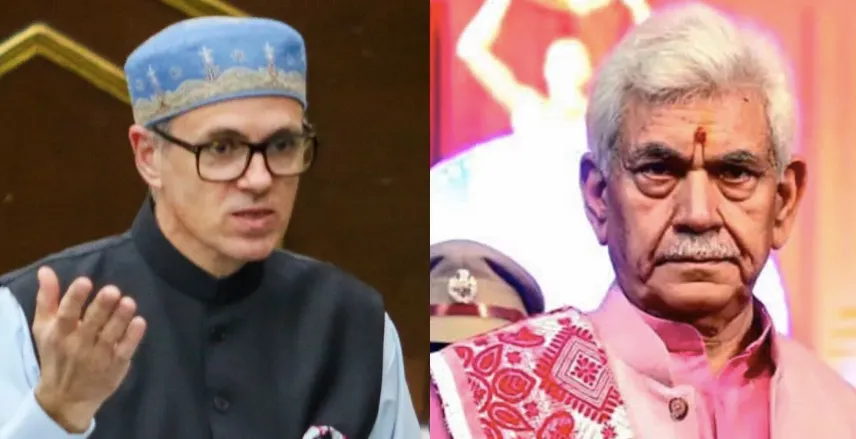
Lieutenant Governor Manoj Sinha who had managed all the affairs from August 2020 till the time of the formation of the elected government, had rule book of the J&K Reorganisation Act 2019 to show that he was acting as per his prescribed role in the changed equations. Honestly speaking, LG and CM never seemed to be comfortable with each other. Now their differences have come into open. They berate each other more than talking in complementary terms.
As things stand, J&K has entered an era where LG – CM public spat is grabbing headlines. This is not something to be amused of. It is Jammu and Kashmir for which thousands of soldiers and civilians have made sacrifice both in wars and peace times. The ego-clashes and undermining of the institutions is not only unhelpful but disasterous.
Everyone needs to realize that if future of J&K as a peaceful destination is to be secured, the mistakes of 2025 must be avoided in 2026.