

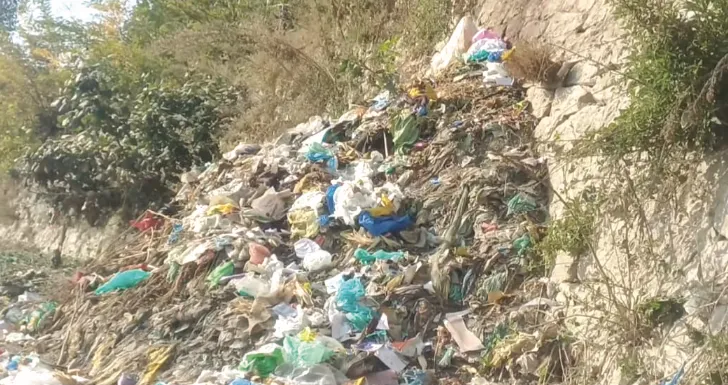






The Jhelum riverbanks in Sumbal have turned into a dumping ground for plastic waste and garbage, with residents raising alarm over the unabated pollution that is choking the waterbody and creating severe health hazards.
Locals say the crisis has persisted for years, complicated by jurisdictional confusion as areas on both sides of the riverbanks fall under different administrative bodies—the block on one side and Urban Local Bodies (ULB) on the other.
“Areas like Tangpora and Hilalabad to Nand Kishore temple fall under the block, whereas areas from the other side come under ULB,” said Shafiq Ahmad, a local resident.
“Massive garbage dumping from commercial establishments and households on both sides has been affecting the river for years.”
The situation in Tangpora is particularly dire. “The spot is filled with plastic waste, and at times even animal carcasses are dumped here,” locals said. “It is a health hazard which should be strictly banned and violators taken to task.”
Nazir Ahmad, President of Sumbal Traders Federation, alleged garbage collection on the rural side is “not being done properly.” He said even town areas under ULB, which were declared “garbage-free” some time ago, witness the Municipal Committee collecting garbage and dumping it outside the Eidgah, near the hospital.
“Although the garbage is then taken to the Shalpora recycling plant, the seepage left at the collection site emanates a foul smell the whole day,” Nazir said.
He said despite several representations to both ULB and block officials, little action has been taken. The lack of oversight and giving a “free hand to violators” continues to add to the mess, he added.
“I am shocked to see how human greed has polluted and destroyed what was once our lifeline,” said Bilal Nasir Zargar, a local environmentalist. “The river that gave us water, life, and identity is now suffocating under our waste. This is not just pollution but a cruel theft of natural resources from the next generation. If we do not act today, tomorrow there may be nothing left to save.”
Block Development Officer (BDO) Sumbal, Majid Iqbal, acknowledged the problem, saying most violators dump garbage at the site “in the dead of night or during wee hours.” He revealed that only 30 percent of the block’s population pays the monthly fee for the door-to-door garbage collection vehicle that operates twice a week.
The officer assured action if violators are caught and said spots found littered with garbage would be cleaned within days if reported.
The Jhelum, once the lifeline of Kashmir, continues to serve as a source of drinking water for many areas—making the unchecked pollution even more alarming.