

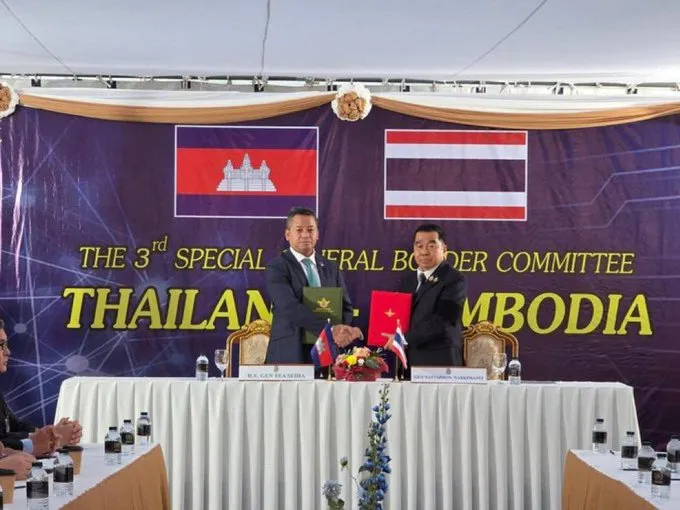






New Delhi, Dec 27: Thailand and Cambodia have agreed to an immediate ceasefire following weeks of intense border fighting that has killed at least 41 people and displaced nearly one million civilians. The agreement was announced in a joint statement by the defence ministers of both countries on Saturday, reports the BBC. Under the deal, both sides will halt all troop movements and allow civilians living in border areas to return home. The ceasefire took effect at noon local time on Saturday. If it holds for 72 hours, Thailand will release 18 Cambodian soldiers currently in its custody. The breakthrough followed several days of talks between Thai and Cambodian officials aimed at ending the renewed hostilities that erupted earlier this month. The agreement outlines a process of de-escalation, including an end to attacks on civilians, civilian infrastructure and military targets, and a commitment to avoid unprovoked firing or troop movements toward each other’s positions.
The release of the detained Cambodian soldiers will be carried out in line with the Kuala Lumpur Declaration, a ceasefire agreement signed by both countries in October, reports the BBC.
That earlier truce collapsed earlier this month, with both sides accusing each other of responsibility for the renewed violence. Fighting has continued intermittently throughout December. On Friday, Thailand carried out air strikes on a disputed border area in Cambodia, which Bangkok said targeted a fortified military position after civilians had evacuated. Cambodia accused Thailand of carrying out indiscriminate attacks on civilian homes. Border disputes between Thailand and Cambodia date back more than a century, but tensions escalated sharply in May after a Cambodian soldier was killed in a clash. Further heavy fighting in July lasted five days and left dozens of soldiers and civilians dead, forcing thousands more to flee their homes. A fragile ceasefire was brokered in late October following intervention by Malaysia and the United States, but Thailand later paused its participation in November, citing continuing security concerns.