

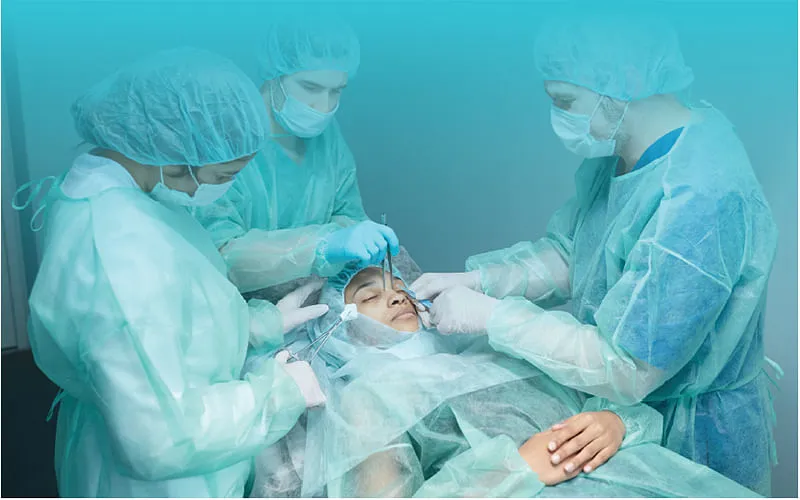






Plastic Surgery Day is not merely an occasion to celebrate a medical speciality — it is a tribute to the science, art, and compassion that together define the field of Plastic Surgery. It is, in truth, one of the most versatile and fundamental branches of surgery, quietly transforming lives across every age group, every background, and every corner of our country. This day comes every year as an occasion to spotlight one of the most dynamic and essential branches of modern surgery- a speciality that combines surgical precision with artistic vision, compassion with science, and innovation with centuries-old surgical principles. Every year, Plastic Surgery Day is observed on 15th July to highlight the remarkable contributions of plastic surgeons in transforming lives, not only through cosmetic enhancements but, more importantly, by restoring form and function after injuries, burns, birth defects, and cancer surgeries. On this special day, we recognize the dedication of plastic surgeons who blend their surgical skill with artistic vision to improve patients’ quality of life.
Plastic Surgery Day also aims to raise awareness about preventing injuries—especially burns and road traffic accidents—that often require reconstructive procedures. This day serves as a poignant reminder that timely intervention, innovative techniques, and compassionate care can help patients heal, regain their confidence, and reintegrate into society. Let us take this opportunity to appreciate our medical teams and pledge to support initiatives that make plastic surgery accessible to all who need it. In our region, local hospitals and medical colleges have been at the forefront of advancing plastic surgery services.
Restoring Form, Function, and Hope: Where Art Meets Science
At its core, plastic surgery represents the perfect fusion of perseverance, precision, creativity, and empathy. It is a discipline that demands not just technical skill but also vision — the ability to restore what disease or trauma has taken away, while respecting both function and form. Whether reconstructing a child’s cleft lip, repairing a mangled hand, covering complex wounds after accidents, or rebuilding the face after cancer surgery, plastic surgeons work at the crossroads of hope and healing. Plastic surgery teaches us that no injury is too severe, no wound too challenging, no defect beyond repair and no patient beyond help. The speciality reminds us that the human body is resilient, and with the right surgical expertise, we can restore dignity, confidence, and quality of life to those who suffer. Plastic surgery is about restoring what has been lost. Whether it is giving a burn survivor the ability to use their hands again, reconstructing the face of a cancer patient, correcting a congenital deformity in a child, or helping someone regain confidence after trauma, plastic surgeons approach each case with both science and art.
A Basic Surgical Speciality: A Timeless Science with Roots in India
Plastic surgery is not just one of the basic pillars of modern surgery – it is also one of the oldest surgical disciplines known to humanity, with its origins tracing back to ancient India. Centuries ago, when the world was yet to discover many of today’s medical wonders, Indian surgeons were already performing complex reconstructive procedures. The father of plastic surgery, Sushruta, lived in India around 600 BC. His legendary text is a treasure of surgical knowledge that describes detailed techniques of wound management, skin grafting, and reconstruction, especially, pioneering the art of nasal reconstruction. In an era where nose amputations were a form of punishment, Sushruta’s ingenious methods of creating a new nose using cheek or forehead flaps laid the foundation for reconstructive surgery as we know it today.
But plastic surgery’s story does not end with Sushruta. Over the centuries, surgeons across the world – from ancient Egypt to Renaissance Europe- built upon these early ideas. Thus, plastic surgery stands as a truly global science, one that began with the brilliance of Indian surgeons and evolved through contributions from all corners of the world. It remains a field that blends ancient wisdom with modern innovation, always focused on one goal: restoring form, function, and hope to those in need. This deep heritage reminds us that plastic surgery is not a luxury, but a time-honoured tradition of healing and rebuilding lives, born in our own land and carried forward by generations of dedicated surgeons across the globe.
Partner to All: A Speciality That Bridges All Disciplines and Specialities
Plastic surgery is a unique speciality that does not limit itself to any one organ, body system, disease or age group. It is a speciality that works across the entire human body, from head to toe, wherever form and function need to be restored. Plastic surgeons are partners to orthopaedic surgeons in limb salvage, to neurosurgeons in craniofacial reconstruction, to ENT surgeons in head and neck cancer reconstruction, to ophthalmologists in oculoplastic surgery, to paediatric surgeons in congenital anomalies, to podiatrists in diabetic foot salvage and reconstruction and to general surgeons in complex wound management. This spirit of collaboration defines plastic surgery’s role as the “surgeon’s surgeon”, a discipline that other specialists turn to when the problem seems too complex, too delicate, or too unusual for conventional solutions. Whether it is designing a new ear from a patient’s own tissue, rebuilding a breast after cancer, or covering a crushed leg with living tissue to save it from amputation, plastic surgeons combine surgical skill, creativity, and compassion to offer patients not just repair, but renewed hope.
Challenges on the Road: Trespassing and Unregulated Practices
Yet, plastic surgery faces its share of challenges – challenges that touch the lives of ordinary people more than many realize. One of the biggest hurdles is limited public awareness. For many in our society, the word plastic surgery immediately brings to mind glamorous images of celebrities undergoing cosmetic procedures. What often gets overlooked is the vital role plastic surgeons play in saving lives, restoring limbs, and rebuilding faces after trauma, cancer, or burns. This misunderstanding means that patients in need, whether a child with a cleft lip, a worker injured in an accident, or a woman recovering from cancer, often delay seeking help. Sadly, by the time they reach the right specialist, preventable complications may already have set in, making treatment more difficult.
Another major challenge lies in the unequal availability of services. In big cities, modern hospitals may have the technology and skilled teams needed for complex plastic surgical procedures. But in smaller towns and rural areas, access is often limited. Advanced techniques like microsurgery, tissue transfer, and intricate hand repairs require not just expensive equipment but also highly trained teams- surgeons, anaesthetists, nurses, therapists- all working together like a symphony.
The cost of this technology, combined with shortages of trained professionals in many regions, creates gaps in care. Burn injuries, for example, are heartbreakingly common, especially among women and children. Without timely and expert plastic surgical care, these injuries can lead to lifelong disability, disfigurement, and emotional trauma. This day reminds us that the true challenge is to bridge these gaps, raise awareness, and ensure that expert plastic surgical care is not a privilege for a few but a right for all. So, plastic surgeons need to work today in an environment where they must balance high expectations with limited resources, striving every day to deliver care that helps people not just look better, but live better.
One more so-called invisible challenge is gaining ground. While plastic surgeons embrace collaboration with other specialities in the best interests of patients, an unfortunate trend has emerged: procedures such as hair transplantation, aesthetic facial surgeries, and body contouring are increasingly being performed by individuals without formal surgical training or legal authorization, often in unregulated clinics. This “trespassing” by unqualified practitioners not only undermines the speciality but, more importantly, puts patients at grave risk. Hair transplant surgeries conducted by non-surgeons and cosmetic procedures offered in unregulated clinics have led to disastrous outcomes — infections, deformities, and, at times, life-threatening complications, including deaths. Hence, again, this day reminds us of the urgent need for public awareness and strict regulation to ensure that delicate procedures are performed only by trained and certified specialists who understand both the art and science of surgery.
New Horizons: Innovation and Research for Better Lives
I hope and believe that the future of plastic surgery is bright and full of promise. Our field is advancing rapidly, embracing cutting-edge technologies. Microsurgery allows for the transplantation of tissue with its blood supply from one part of the body to another. Advances such as microsurgery, 3D printing of body parts, tissue engineering, and regenerative medicine are opening doors that once belonged only to imagination. In aesthetic surgery too, new techniques aim at natural, harmonious results while ensuring patient safety. Importantly, we have to understand that aesthetic and reconstructive surgery are not rivals but parts of the same continuum — both seek to restore what is lost or desired, safely and ethically, and thereby help patients look good, feel good, and live with dignity. In essence, we aim not just to restore or improve physical form, but to heal the mind and spirit, enabling patients to reintegrate into society with confidence.
The Way Forward: A Celebration of Healing and Humanity
This is the day and the occasion to celebrate the silent heroes who work tirelessly, through their skill and dedication, restore lives every single day. Let us also commit to raising awareness, so that people understand the true scope of plastic surgery and no patient is deprived of the care they deserve because of myths or misinformation. Above all, let us pledge to protect patients by advocating for ethical practices, discouraging unqualified interventions, and ensuring that access to genuine plastic surgery care reaches every corner of our society.
Finally, as a society, we must support policies that ensure plastic surgery services, especially reconstructive and burn care, are available to one and all, regardless of income or location. Behind every reconstructed face, every functional limb, every healed burn, every scar made less visible, there lies not just a patient’s story or a surgical success, but the story of human resilience made possible by the art and science of plastic surgery.
Dr Umar Farooq Baba, Consultant, Department of Plastic Surgery, SKIMS, Soura, Srinagar