







Srinagar, Jan 1: The Director School Education Kashmir (DSEK), Naseer Ahmad Wani, on Thursday said that private schools are an integral part of the education sector in Jammu and Kashmir and share the same core objective as government institutions—imparting quality education to children.
Speaking to Greater Kashmir after the conclusion of a workshop at JKSCERT, Wani said the only distinction was that private schools function under regulatory oversight of the government. “Otherwise, the motive of both government and private schools is the same—providing quality education to students,” he said.
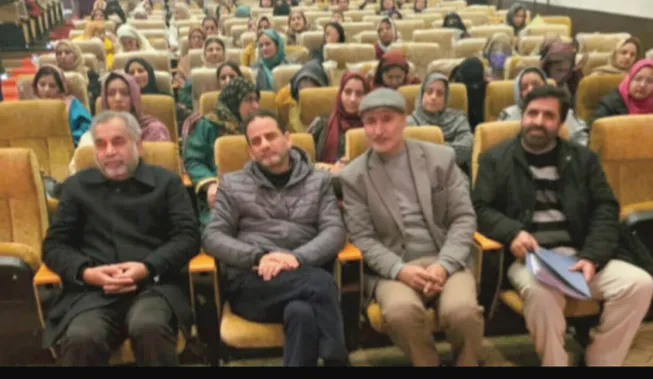
The workshop, organised in the backdrop of poor learning outcomes highlighted in the National Achievement Survey (NAS) report released in July 2025, focused on intervention plans and the role of stakeholder engagement in improving student performance.
It was organised by the District Institute of Education and Training (DIET) Srinagar in association with the J&K State Council of Educational Research and Training (SCERT), Kashmir. The orientation programme aimed to deliberate on intervention strategies and collaborative approaches to improve learning outcomes in the post-PARAKH Rashtriya Sarvekshan 2024 phase.
Addressing the participants, Wani said that the Performance Assessment, Review and Analysis of Knowledge for Holistic Development (PARAKH) was a diagnostic rather than a judgmental assessment tool. He stressed that collaboration among all stakeholders was crucial for improving learning outcomes. “A foundation-level study will be conducted in March this year to systematically prepare learners for upcoming assessments,” he said.
Nodal Principal of Government Degree Colleges (GDCs) in the Kashmir division, Prof. Seema Naz, spoke on pedagogical interventions aligned with the National Education Policy (NEP) 2020. She emphasised innovative practices such as experiential learning, activity-based learning and ICT-integrated teaching methods.
Dean, School of Education and Behavioural Sciences, University of Kashmir, Prof. Tasleema Jan, underlined the importance of constructivist approaches to education. She said continuous professional development and collaborative practices among educators were essential to building a progressive learning society envisioned under NEP 2020.
President of the Private Schools Association J&K (PSAJK), Nazrul Islam Baba, cautioned against the practice of “teaching to the test.” He said the focus must shift from mere content coverage to competency-based learning encompassing knowledge, cognitive abilities, skills, values and attitudes across both public and private sectors.
Chief Education Officer (CEO) Srinagar, Ghulam Mohindin Bhat, stressed the need to use PARAKH findings as a roadmap for systemic improvement in learning outcomes across schools in the district. He called for classrooms to prioritise critical thinking, innovation, entrepreneurship, green skills, digital literacy and social-emotional learning.
However, Bhat expressed concern over comparatively low learning levels in Jammu and Kashmir, particularly in Srinagar, despite improved infrastructure, increased ed-tech exposure, a strong coaching culture and higher parental engagement.