







Kashmir’s economic challenge is often described in terms of unemployment, inequality, or lack of opportunity. In reality, the deeper issue is the absence of scale, systems, and long term thinking. For decades, development policy in the region has relied on fragmented schemes, subsidies, and short term relief measures. While these may offer temporary comfort, they do not create an economy capable of sustaining growth, dignity, and prosperity
History offers a consistent lesson. Societies do not rise by distributing cash alone. They rise when the state, along with serious private capital, invests in infrastructure, institutions, and productive capacity. These are assets that individuals and small businesses can never build on their own. The foundations of development such as power generation, road and rail connectivity, logistics networks, industrial ecosystems, global class universities, advanced hospitals, international airports, and digital infrastructure are beyond the reach of ordinary citizens and local entrepreneurs. When these systems are missing, inequality persists regardless of how much money is redistributed.
Inequality is not solved by consumption. It is solved by production. Kashmir today requires a shift from scheme based governance to project based economic transformation, anchored firmly in scale.
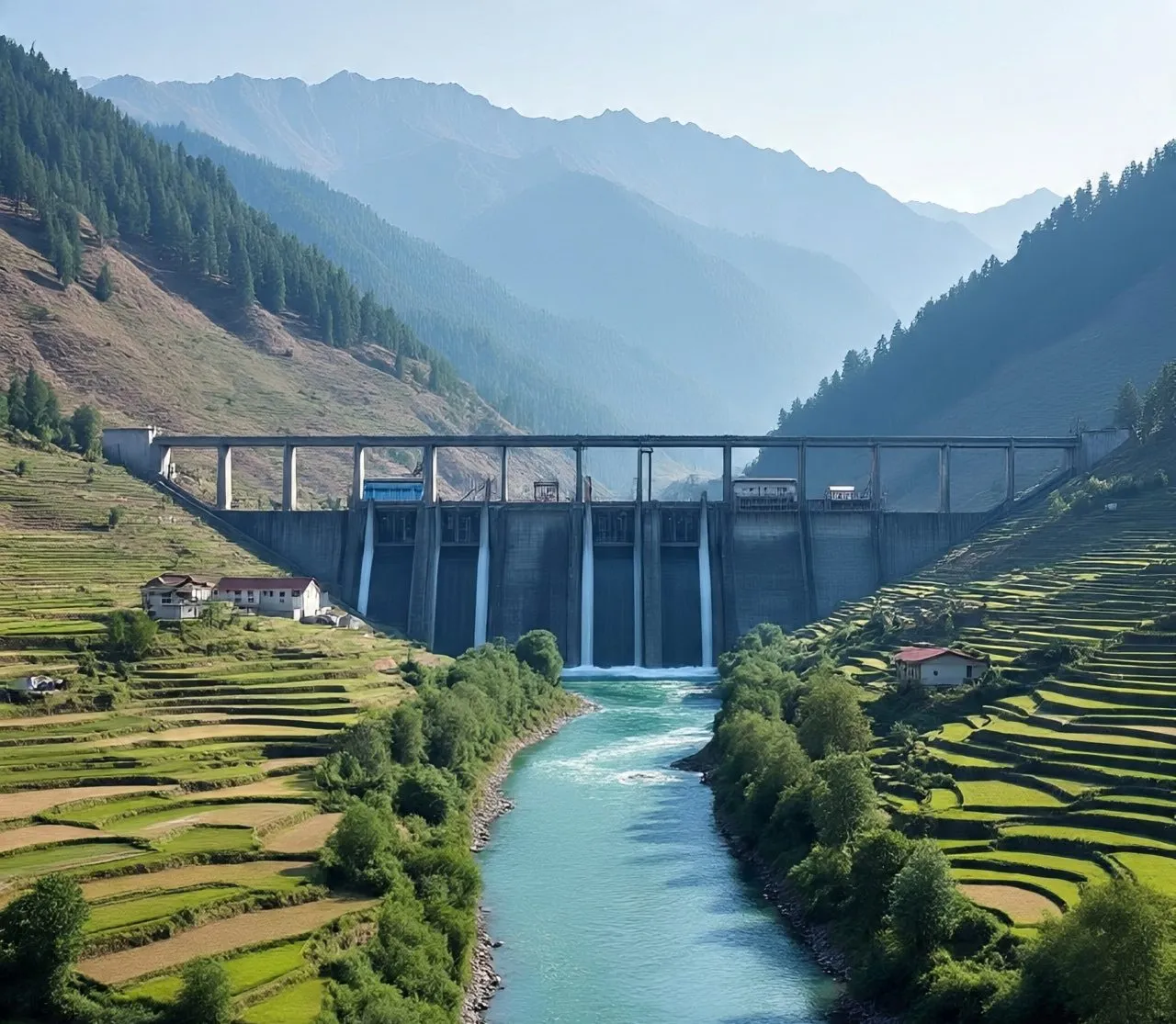
Kashmir possesses immense hydroelectric potential, yet continues to face power shortages. This contradiction must be addressed decisively. Large hydro power projects should be developed to make the region power surplus rather than merely power sufficient. Affordable and reliable electricity is the most critical input for industry, information technology services, healthcare, and education. A power surplus would allow Kashmir to attract energy intensive industries and emerge as a net exporter of clean energy. No industrial policy can succeed without energy security.
Kashmir’s climate provides a natural advantage in dairy, livestock, and high value agriculture. However, current efforts remain scattered and insufficiently capitalised. The region needs large integrated dairy farms and agro processing complexes supported by modern cold chain logistics, processing units, and export infrastructure. Such projects can stabilise rural incomes, reduce imports, and create employment across the entire value chain, from farmers and technicians to transporters and marketing professionals. Small interventions cannot unlock large outcomes. Scale can.
No serious investor, domestic or international, commits capital without reliable connectivity. Kashmir requires all weather road and tunnel networks, complete rail connectivity for passengers and freight, and modern logistics parks linked to industrial and agro zones. Infrastructure is not the result of growth. It is its foundation.
Kashmir does not need a handful of factories. It needs industrial ecosystems. Large industrial parks with ready land, power, water, waste management, and regulatory support can create plug and play environments for manufacturing, food processing, textiles, and light engineering.
Anchor investors attract supply chains, small and medium enterprises, and skilled labour, creating a multiplier effect that isolated units never achieve. No region becomes prosperous without becoming a knowledge hub. Kashmir must invest in global class universities, education cities, engineering institutes, and research centres aligned with future industries such as renewable energy, climate science, artificial intelligence, infrastructure engineering, and mountain ecology. Universities are not merely academic spaces. They are engines of innovation, entrepreneurship, and global engagement.
Global class medical colleges, teaching hospitals, and health cities can position Kashmir as a regional healthcare hub. Such institutions generate skilled employment, reduce dependence on facilities outside the region, and open opportunities in medical tourism and research, particularly in high altitude and climate related medicine. Healthcare is both social infrastructure and economic opportunity.
Geography is no longer a limitation. Government backed information technology parks, innovation hubs, and data centres powered by clean hydro energy can integrate Kashmir’s youth into the global digital economy. Technology driven growth offers high value employment without heavy logistics costs. Modern economies move through air corridors. International class airports with cargo terminals, perishable handling facilities, and global connectivity are essential for exports, tourism, education, and healthcare. Airports are not expenses. They are economic multipliers.
For such a transformation to succeed, all government departments must work in sync with this mission. Planning, power, roads, industry, education, health, finance, and environment must move together under a single long term economic vision. Silos, delays, and conflicting priorities dilute impact.
Development at this scale demands coordination, accountability, and continuity. When departments act in isolation, projects stall. When they act together, momentum becomes irreversible. Above all, the youth of Jammu and Kashmir must see themselves as builders of the region. No policy or investment can substitute for generational responsibility. Short term thinking and narrow self interest will not serve Kashmir.
What is required is patience, discipline, and commitment to building for future generations rather than immediate gains. Regions rise when their youth choose creation over complaint and legacy over convenience.
Conclusion
Cash transfers fade. Schemes expire. Infrastructure, institutions, and industries endure.
Kashmir’s economic revival demands long term vision, large scale investment, and collective seriousness from the state, from industry, and from society itself. There are no shortcuts to development. What is built in haste collapses. What is built with vision lasts for centuries.
Sajid Farooq Shah is an entrepreneur based in J&K.