

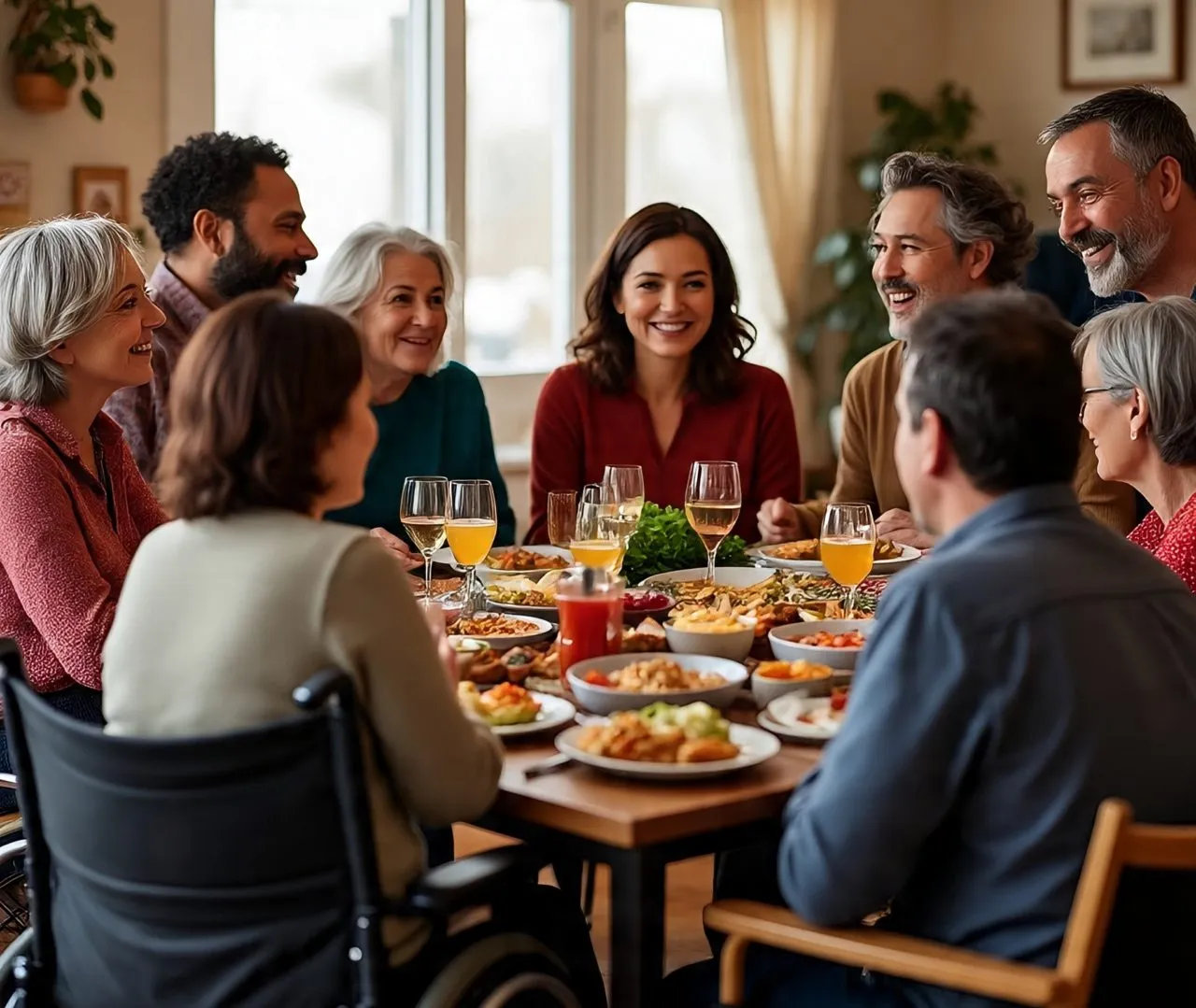






During my posting in Hyderabad, one of the allowances I received was for language support. I invested the amount to learn the basics of Indian Sign Language (ISL) so I could communicate well with my deaf colleague. During Christmas and New-Year celebrations that year, everyone else was laughing and singing but this Bilaspur boy was sitting quietly in the corner. It struck me deeply how joy can sometimes feel out of reach when the world around you does not speak your language.
For deaf people, this scene is painfully familiar. It even has a name: Dinner Table Syndrome—the silent exclusion that happens when conversations skip over you, when you are told, “It is not important,” or “I will tell you later.” What is dismissed as chatter or gossip is, in fact, the very heartbeat of belonging. When denied, it turns into isolation.
The Invisible Community
India’s 1991 census had no questions on disability. The 2001 census collected data on five types of disabilities. The last census held in 2011—over 14 years ago—expanded this to eight categories. It recorded 26.8 million people with disabilities, which was just 2.21 percent of India’s population at the time. Since then, the Rights of Persons with Disabilities (RPWD) Act of 2016 has expanded the list to 21 disabilities and now we are the most populous country on earth. Yet, because no fresh census has been conducted since 2011, media continues to tell us that we are less than 3% of the total population which is inaccurate.
Insensitive Media Ecosystem
India’s media ecosystem is massive: 400+ news channels, over 100,000 newspapers, 460 million YouTube users. Yet, one question remains unanswered: how much of this ecosystem sees, hears, and represents its disabled citizens with dignity? Most do not.
Instead, what we see is lazy vocabulary and reductive frames. Hindi dailies often assume that disabled people lack agency. English newspapers casually drop phrases like “suffering from autism” or “overcame Down syndrome.” Neurodivergent people are demonised as violent or “mad.” This is not just inappropriate. It fuels ableism—the everyday discrimination in favour of non-disabled people. It shapes public perception, politics, and even policy. Language matters. Representation matters. Because words do not just describe reality, they create it.
The Curse of “Inspiration Porn”
In 2014, Australian journalist and wheelchair user Stella Young gave the world a term that became a battle cry: inspiration porn. It refers to the way disabled people are objectified for the benefit of non-disabled audiences. The viral story of a man with no arms painting with his mouth. The headline about a “limbless boy topping exams.” The Instagram reel of a blind girl typing fast. But why is existence framed as extraordinary?
As Stella wrote, “We all learn to use the bodies we are born with, or adapt to them. Why should my everyday life be your inspiration?”
And yet, twelve years after her words, most Indian journalists seem unable to write about a disabled person without phrases like “overcoming disability”, “defying the odds”, “wheelchair bound”, or the patronising favourite—“brave.” It is brilliant to highlight the achievements of persons with disabilities. We appreciate it. But remember when you call that 1% ‘inspirational’, you are creating a barrier, a vacuum, a void within the community. Remaining 99% who live with the disabilities feel inferior and that 1% is boxed. You, as an anchor, a reporter should know that everyone cannot do super inspirational things and that is completely okay. Stop sensationalizing the ‘inspirational stories’. Normalize the narrative, celebrate disability without feeling pity.
When Headlines Hurt
Take a headline that screamed: “From impairment to inspiration.” What does that tell the reader? That impairment equals despair, and the person’s only worth lies in transcending it. That being disabled is a tragedy until you win a medal or a job. This is not empowerment. This is erasure.
Journalism is supposed to demystify, not dramatize. It must highlight systemic barriers—lack of ramps, inaccessible schools, and exclusionary policies—not reduce people into objects of pity or awe. Do not equate disability with tragedy. Why can’t Indian media adopt similar sensitivity?
The BBC’s disability guidelines offer a blueprint:
- Do not say “wheelchair-bound”; say “wheelchair user.”
- Do not say “suffering from”; say “living with.”
Ableism in Media Houses
Just last year, The Economist ran a cover showing a walker with the US presidential seal under the headline “No Way to Run a Country.” The image suggested that using a mobility aid makes you unfit for leadership. The backlash was swift. Advocates pointed out that Franklin D. Roosevelt, one of the greatest US presidents, used a wheelchair. Leadership is not limited by mobility. But the damage was done: once again, a disability was weaponized as an insult. This is the power of imagery. One picture can entrench stigma across borders.
Bollywood and the Joke that Never Ends
For decades, Indian cinema has mined disability for comic relief. From the Golmaal series to Housefull 3 to Aankh Micholi, Ableist jokes have drawn cheap laughs. “Are you blind? Are you deaf?” — Phrases shouted on screen as punch-lines, while audiences roar. But for disabled viewers, these are not jokes. They are everyday humiliations repackaged as entertainment. Recently, activists like Nipun Malhotra took these portrayals to court. The Supreme Court finally issued guidelines on how disability must be shown in films. It was a historic step, but far from enough. Because true change will come only when disabled actors, directors, and writers get to tell their own stories—not just play caricatures written by others.
Everyday Ableism: Micro-aggressions we ignore
Representation is not only about headlines and films. It is also about conversations. And often, the smallest phrases cut the deepest. Here are six things people often say to disabled people that reek of ableism:
“Can you be cured?” – Disability is not a disease to be eradicated.
“I will pray for you.” – Disabled people do not need pity disguised as prayer.
“My cousin has the same thing and she is fine.” – Every disability is unique.
“Have you tried yoga/homeopathy/this miracle treatment?” – Unsolicited advice erases lived experience.
“I am sorry.” – Sympathy suggests disability is a tragedy.
“Your life is over.” – No. Disabled lives are full lives.
These phrases seem harmless to non-disabled people. But they reinforce the same hierarchy of worth that media headlines scream aloud.
Pride, Not Pity
We just celebrated July as Disability Pride Month worldwide. The very word “pride” unsettles many in India, where disability is still whispered about in terms of suffering or burden. But pride is resistance. Pride is reclaiming identity from shame. Pride is rejecting both pity and pedestal.
Disability is neither a disease nor a disorder. In her 1999 book, “Exile and Pride: Disability, Queerness, and Liberation”, Eli Claire, says that “To frame disability in terms of cure is to accept the medical model, to see disabled people as sick. But we are not sick—we are human.” Disability is diversity.
To add insult to the injury, they follow a very problematic “charity model” representation. They highlight and focus on the sufferings if someone from the community makes strides in the career or does something out of the box.
Let me flesh it out a bit with a fresh example from Kashmir. Check out this problematic headline as a reference. What do you, as a journalist, want to prove by writing “despite being limbless/visually or hearing impaired?” What do you, as readers, infer from it? Please take note, as a non-disabled person, when you write “from impairment to inspiration”, you negate the disability and that is insensitive and not okay with the community. Therefore, “disability sensitive training” is important.
Towards Better Storytelling
So what does responsible media representation look like? Here’s a simple checklist for journalists and storytellers:
- Focus on causes, not characters. Address systemic barriers, not just individual heroics.
- Normalise, don’t dramatize. Show disabled people working, laughing, and struggling— like anyone else.
- Respect language. Use “disabled person” (an identity), not euphemisms like “differently-abled” or “specially-abled” that make disability sound shameful.
- Show context. Achievements do not happen in isolation—highlight assistive tools, supportive networks, and accessibility measures.
- Include disabled voices. Nothing about us without us.
Reframing the Narrative
The good news? Change is possible. Campaigns like Everyone Is Good at Something (EGS) are already archiving everyday stories of disabled Indians—ordinary lives, ordinary joys, ordinary dreams. Internationally, disabled creators, filmmakers, and journalists are pushing back against lazy tropes. Even courts are recognising the damage of Ableist humour. But Indian media must catch up. It must train its reporters. It must revise its vocabularies. It must listen to disabled people because until then, disability will remain a footnote in a country where it should be a chapter.
Outro
Dinner Table Syndrome is not just about deaf children watching lips move without words. It is about an entire community left out of the conversation of the nation. If India’s media can learn to see us not as tragedies or inspirations but as citizens, colleagues, leaders, and creators, then maybe one day no one will feel invisible at the dinner table. Disability is not a burden. It is not a blessing. It is life—messy, ordinary, and worthy of dignity. And the stories we tell about it matter.
Note: After completing his VLI (Virtual Leadership Institute) Program with Distinction at Atlas Service Corps, the author received Community Impact Fund (CIF) grant for his project Reframing Disability Narratives. This piece is funded by Cultural Vistas, Washington D.C.