







We inhabit an increasingly asymmetrical world order marked by uncertainty, fragility, and unpredictability in human exchanges. The stabilising certainties that once anchored social life, relatively durable institutions, bounded communities, and shared moral vocabularies, have gradually eroded. No place today can claim absolute safety, and no society remains culturally self contained. Globalisation, intensified migration, technological acceleration, and the reconfiguration of political and economic power have together produced a condition in which mobility is simultaneously a necessity and a risk. People move across regions and nations in pursuit of better life chances, yet migration is never merely economic. Migrants carry with them layered histories, identities, cultural dispositions, linguistic habits, and unequal technological competencies. These do not dissolve upon arrival. Rather, they reappear in altered forms, often under conditions of heightened visibility, vulnerability, and tension.
Encounters between cultures, particularly between what are broadly designated as the East and the West, rarely unfold on symmetrical terms. Such encounters remain structured by historically sedimented hierarchies of power, race, and epistemic authority. Language itself becomes a site of mis-recognition, producing what sociologists have long described as symbolic violence. Expectations collide, meanings fracture, and identities are unsettled. Under these pressures, individuals and groups often seek refuge in larger identity formations such as religion, nationalism, or oppositional political positions that are swiftly labelled anti national or deviant. Liberal representative democracy, once invested with the promise of accommodating difference through pluralism and rights, increasingly appears inadequate to regulate these anxieties. Political representation loses moral depth, governance becomes procedural rather than ethical, and the capacity to hold together social difference weakens. What emerge, then, are questions central to sociological inquiry. How does one live together in a multicultural society organised around the nation state? How can difference be acknowledged without reproducing exclusion?
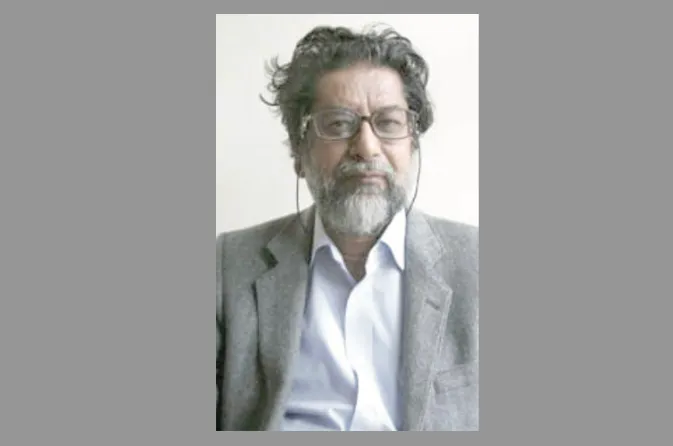
It is against this wider condition of global uncertainty that certain contemporary intellectual practices acquire renewed significance, not through proclamation but through their mode of circulation. The recent digital availability of lectures by eminent Jawaharlal Nehru University alumni gestures toward a revitalised form of public engagement, allowing critical traditions to move beyond institutional enclosures. Among these interventions, Professor Sudipta Kaviraj’s lecture on Black Marxism stands out for its analytical depth and sociological resonance. Its importance lies not in ideological assertion but in its sustained inquiry into how human othering is produced, stabilised, and rendered natural.
Kaviraj’s lecture may be read as a quiet yet profound quest for theoretical truth, one that refuses abstraction detached from lived experience. At this stage of his intellectual journey, truth does not appear as a finished system or doctrinal closure but as something slowly sedimented through time. It begins with the moral and cognitive formation of a small town upbringing, unfolds within the dialogic and plural ethos of JNU, and finds further elaboration at Columbia University, where intellectual traditions confront global asymmetries with sharper clarity. Though Kaviraj does not foreground autobiography, sociology reminds us that knowledge is always positional. Thought is never produced from nowhere. It is shaped by location, mobility, and historical circumstance. Distance from one’s origins does not erase attachment. It transforms it into reflection.
What animates the lecture is a subdued ethical anguish regarding contemporary conditions of uncertainty and exclusion. This anguish is neither rhetorical nor performative. It is moral in nature, a recognition that modernity has lost its anchoring certainties while intensifying its mechanisms of marginalization. Kaviraj does not offer grand solutions or theoretical closures. Instead, he gestures toward more modest yet demanding practices, namely serious reading and disciplined personal conduct. Reading, for him, is not consumption but responsibility.
Here his position resonates implicitly with Roland Barthes’s insistence on the “death of the author.” Meaning does not reside securely in authorial intention or canonical authority. It is produced in the act of reading. Yet for Kaviraj this is not a relativist celebration of interpretive freedom. The reader is ethically bound. Reading becomes a moral labour in which one must attend carefully to what texts reveal and, equally, to what they conceal. The act of reading thus carries consequences, not only for interpretation but for how social suffering is recognised or ignored.
Texts, in Kaviraj’s understanding, possess both fixity and openness. They stabilise meanings through concepts, arguments, and historical locations, yet they also exceed themselves when read across different times, spaces, and political contexts. This tension recalls Michel Foucault’s notion of the author function, where authorship is less a sovereign origin of meaning than a regulatory principle within discourse. What matters is not who speaks, but how discourse circulates, whom it authorises, and whom it excludes. In this sense, Kaviraj treats Marxism, Black Marxism, and even modernity itself not as closed theoretical systems but as discursive fields and sites of struggle over meaning.
This hermeneutic sensitivity allows Kaviraj to move beyond orthodox class analysis without abandoning Marxism. His engagement with Black Marxism exemplifies this reworking. Marxism is neither rejected nor romanticised. It is reread attentively, with sensitivity to what classical economism leaves unsaid. The circulation of labour and surplus, when approached with Derridean attentiveness to silences and excesses, reveals forms of domination irreducible to class alone. Exploitation is material, but it is also symbolic, cultural, and racialised. Domination operates not only through deprivation but through distance, misrecognition, and the foreclosure of everyday sociality.
In this context, Kaviraj revisits W. E. B. Du Bois with renewed urgency, placing him alongside B. R. Ambedkar as thinkers whose relevance intensifies rather than recedes with time. Du Bois’s formulation of the colour line is not treated as a historical description confined to early twentieth century America but as a durable social structure. Kaviraj shows how the colour line functions analogously to caste. Both organise inherited hierarchy, radical separation, and restricted interaction. Exclusion here is not merely economic. It is deeply social, inscribed in everyday habits, affective distances, and regimes of recognition. Material inequality follows from this social foreclosure rather than preceding it.
One of the most unsettling observations in Kaviraj’s lecture concerns migrants and émigrés from postcolonial societies. Rather than aligning themselves with historically excluded Black communities, many gravitate toward the normative universe of whiteness, seeking proximity to power rather than solidarity with marginality. This is not simply a matter of individual choice. It is structurally produced through institutions, labour markets, and cultural imaginaries. Here, the sign of class mobility masks the event of racial exclusion. Aspirations themselves become racialised, revealing how deeply domination operates at the level of desire.
At this juncture, Kaviraj’s method converges with a French poetic sensibility. His invocation of French poetry, particularly images of a degraded beach where beauty persists amid erosion and waste, functions as more than metaphor. The degraded beach becomes a figure for modernity itself, a space once imagined as pure and regenerative, now marked by debris, residues, and unresolved histories. Like poetry, theory here does not explain away damage. It lingers with it. The sign no longer transparently refers. It bears the scars of the event, marked by anguish, betrayal, and the fragile satisfaction of illumination.
Language thus emerges as a contested terrain, capable of both masking domination and naming injustice. Situated knowledge challenges universalist claims that often reproduce exclusion even as they profess emancipation. Kaviraj’s reading reminds us that critique is never neutral. It is shaped by where one reads from and whose suffering becomes legible. The reader, like the intellectual, is implicated in the ethical consequences of interpretation.
Toward the end of the lecture, Kaviraj turns, with restraint, toward philosophy and spirituality. His invocation of Kashmiri Śaivism and the Bengali vernacular gestures toward historical experiences in which plurality and blending were integral to social life. Difference rooted in nativity carries the possibility of a shared moral universe, whereas difference experienced in displaced locations often hardens into social distancing. In contemporary representative democracy, caste relations are increasingly re-articulated as identity politics rather than as questions of ethical recognition or esteem. Though distinct from the Western colour line, this shift shares its capacity to normalize exclusion.
The lecture ultimately resists closure. It offers no final theory, only a mode of thinking that is attentive to texts, alert to exclusions, and grounded in ethical self reflection. In an age marked by epistemic fragmentation and moral fatigue, Sudipta Kaviraj’s reflections remind us that theory is inseparable from biography, reading from conduct, and critique from responsibility. Such thinking does not promise resolution, but it insists on vigilance. In fractured times, that insistence itself becomes a moral act, an effort to illuminate the social invisible, even in its most suppressed and silenced corners.
Author’s Note: I am grateful to Samim Asgor Ali for making these lectures accessible through social media.
Prof. Ashok Kaul, Retired Emeritus Professor of Sociology, Banaras Hindu university