

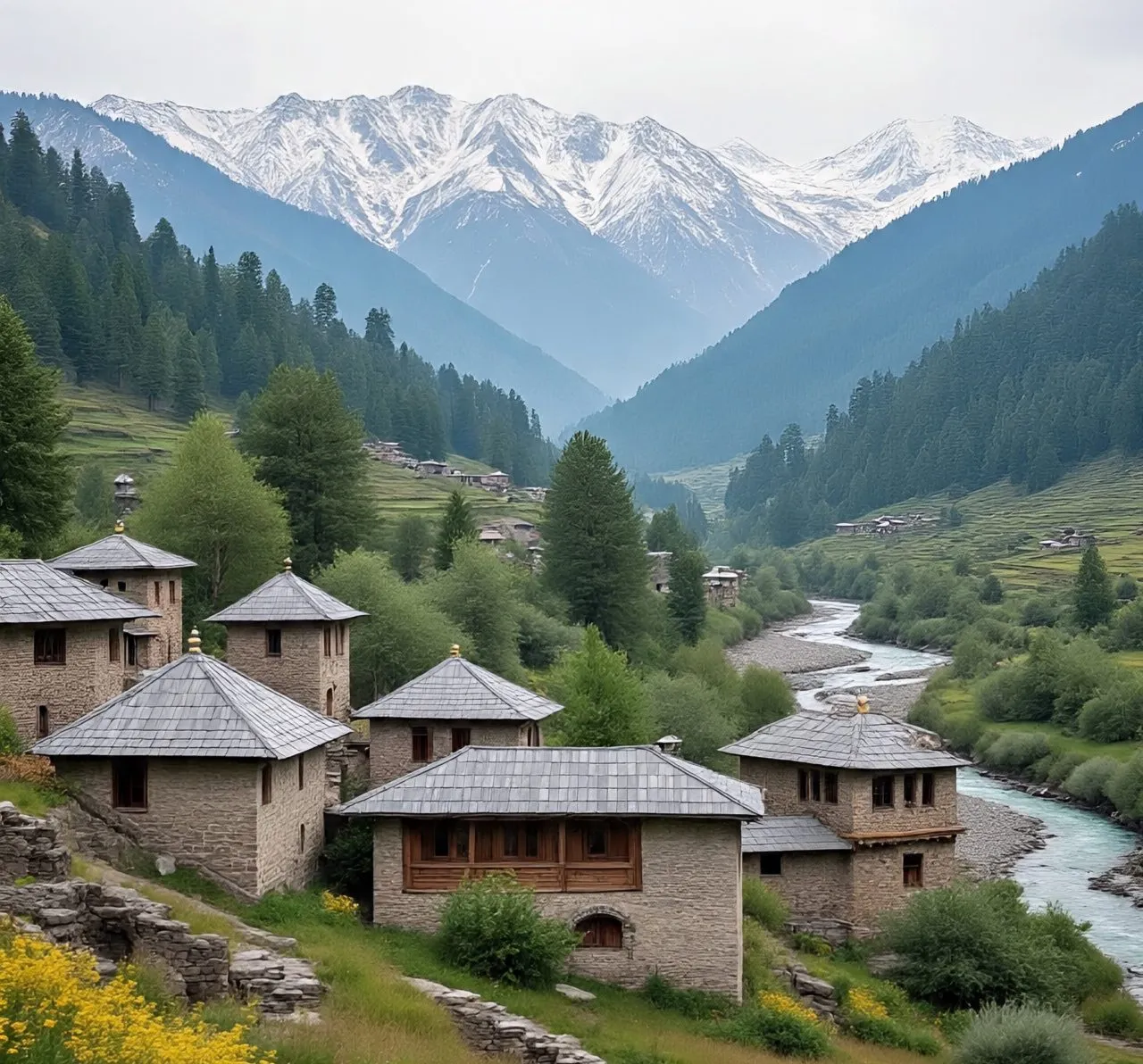






Kashmir’s new classification into Seismic Zone VI marks a pivotal moment for architecture, urban planning, and housing across the valley. This highest seismic risk level means that the next major earthquake could be catastrophic unless building practices evolve rapidly from just strong to sustainably strong.
But sustainable architecture in Kashmir is not only about withstanding quakes but it is about reviving traditional ecological wisdom while integrating modern engineering solutions, reducing carbon footprints, and enhancing community wellbeing.
The Ancient Wisdom of Resilience
Long before modern structural engineering, Kashmiri communities developed building systems that inherently resisted earthquakes.
Two routine techniques used by the citizens in building houses and homes are:
Taaq Construction
This is a timber-laced masonry system where wooden beams run horizontally through walls at regular intervals, tying masonry and providing ductility (flexibility). This technique helps walls flex during seismic shaking instead of cracking catastrophically.
Dhajji Dewari
This meaning patchwork quilt wall which is a timber frame with small panels of masonry infill. The wooden frame absorbs and distributes seismic energy, while the infill provides mass and insulation. Its performance in past earthquakes has shown higher resilience than heavy unreinforced masonry.
These techniques used locally available materials of stone, timber and clay mortar which was used long before modern sustainability became a buzzword. They reduced material transport emissions, supported thermal comfort, and handled vibrations gracefully that is what is the core sustainability principles today.
Modern Engineering Meets Green Principles
While traditional systems offer seismic resilience and sustainability, they can be strengthened and adapted with modern innovations.
Earthquake-Resistant Structural Design
In modern and innovative methodologies a technique called base isolation system which lets buildings float on seismic waves thus reducing shaking impact. Another method is dampers and shock absorbers to mitigate seismic forces which is similar to high-tech earthquake engineering used in global buildings.
Ductile Sustainable Materials
Use of mass timber, bamboo-reinforced elements, recycled aggregates, or fly ash bricks can offer lightweight, low-carbon, and more flexible structural systems suited for seismic zones.
Hybrid Systems
Blending traditional timber frameworks (for ductility) with engineered seismic detailing (for strength) creates buildings that are both resilient and environmentally responsible.
By selecting such materials, architecture in Kashmir can minimize embodied carbon, reduce energy demand, and enhance seismic safety that is a triple win for sustainability.
Smart Planning for Safer Communities
Architecture cannot succeed in isolation but it is to be embedded into seismic-aware planning. Some of the broader incorporations into such planning should undertake a micro seismic hazard assessments to identify safe building sites and avoid fault lines. Keep provision for open public spaces provide evacuation areas. Zoning is to be done that limits high-risk density in soft soils or close to slopes. Detailing out the retrofit policies help upgrade old and vulnerable structures is to be included in the planning process.
Case Examples: Earthquake-Resilient & Sustainable Designs
While Kashmir’s own traditional methods are foundational and looking globally and regionally which can inspire locally adapted solutions.
Japan’s Base Isolation & Dampers
Japanese buildings and their architecture has adapted to the seismicity and they use base isolation bearings and dampers that allow seismic motion absorption which reduces risk even in high-rise structures.
Taipei (Taiwan)
Similarly in Taipei, although different in scale but Taipei 101’s design (deep foundations, flexible structural bracing) illustrates how engineering and architectural design can create both safety and aesthetic excellence in quake zones.
In India in Himalayas and in Assam houses use timber and local materials to achieve seismic strength and climate adaptability showing how regionally rooted traditions in building structures can have modern sustainable design.
All theses case studies showcases a core truth that earthquake resilience and sustainability are deeply compatible when design is responsive to environment and hazard.
Education, Policy & Community
For sustainable seismic architecture to thrive we need to have a skill development Institute where Builders and masons are trained in both traditional and modern seismic techniques. The Engineering Institutes who impart Architectural education should integrate resilience and sustainability. Building code needs a total revamp by the SMC and local municipal councils and such policies must enforce updated building codes reflecting Zone VI requirements. In all such things Community involvement is very essential. They can ensure designs meet cultural needs and local practices apart from getting first hand information about such policies and building codes.
The Path Ahead: A Resilient, Green Kashmir
Sustainable architecture in Zone VI Kashmir means total revamping of our planning regime and rediscovering traditional wisdom which is the corner stone of development. We have to embrace modern engineering and plan with hazard insight and build community capacity.This holistic approach doesn’t just make buildings stronger but it builds safer, greener, culturally rooted communities that can thrive even in the face of powerful natural forces.
Kashmir’s built up environment can be a global model of how sustainability and seismic resilience enrich each other. This will help us in honoring the past while engineering a safer and a greener tomorrow.
The author is a corporate governance and risk management expert