

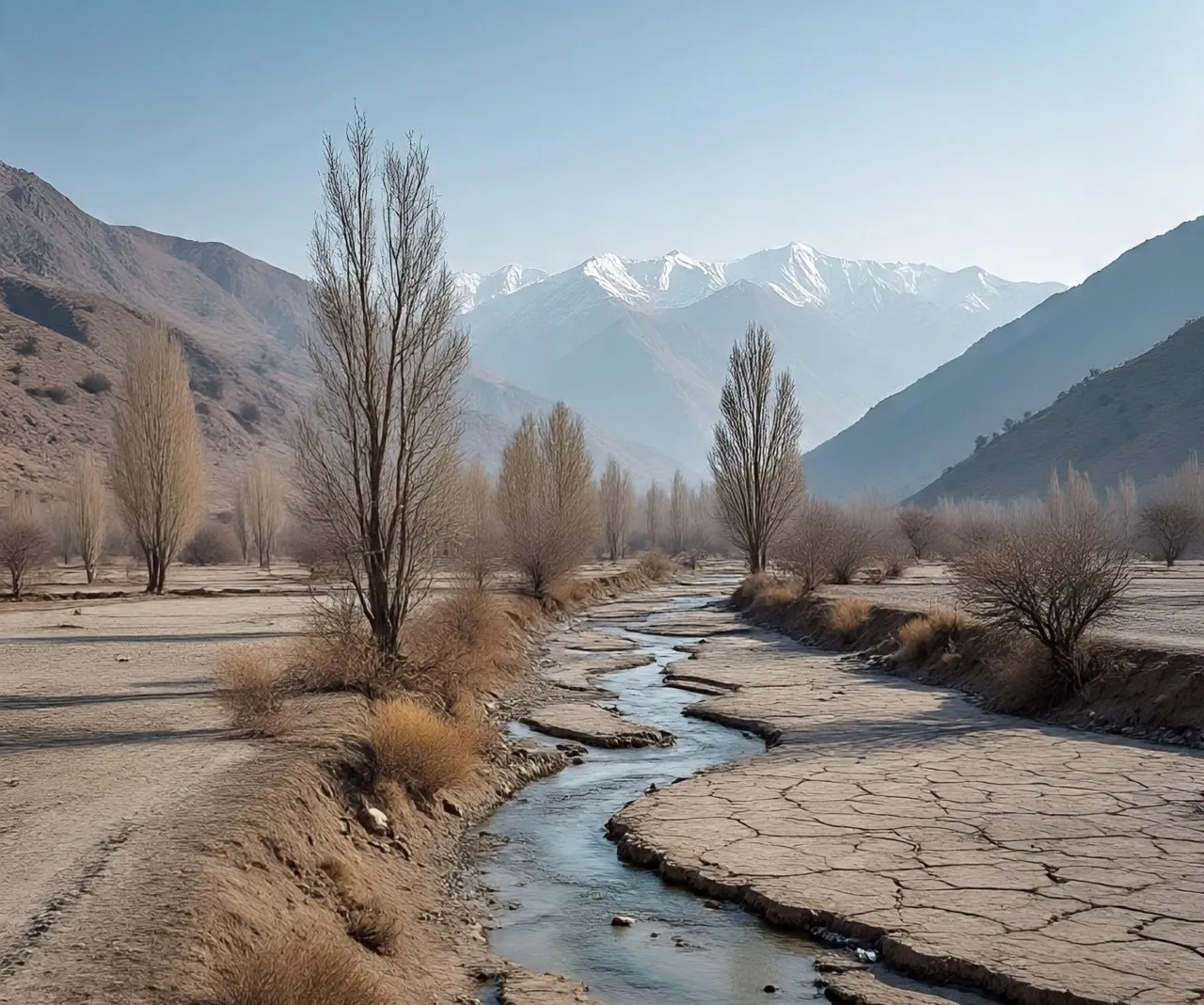






An 86 percent rainfall deficit at the onset of winter is not merely an aberration of weather, it once again reminds us effects of the creeping global climate change in the Valley. What should have been the season of replenishment is instead threatening to turn into a snowless winter, with consequences that may linger far beyond the coming months.
Winter precipitation, particularly snowfall, is the backbone of Jammu and Kashmir’s hydrological cycle. Snowpack feeds rivers like the Jhelum and its tributaries well into summer, sustaining agriculture, drinking water supplies, and hydropower generation. Its absence is already visible. Rivers are flowing below normal, tributaries are drying up, and water levels have dipped below zero gauge at critical points. These are the early indicators of stress that will be felt most acutely by farmers, urban households, and downstream communities.
Equally alarming is the rise in forest fires, an unusual and deeply troubling phenomenon for this time of year. Winter was once a natural firebreak, with snow and moisture suppressing flames. Today, dry vegetation and prolonged moisture deficit are turning forests into tinderboxes.
A snowless winter also threatens agriculture. Reduced soil moisture affects crops, while poor snow accumulation diminishes spring meltwater essential for irrigation. Apple orchards and other horticultural staples, which rely on steady moisture cycles, may see a decline in productivity. Tourism, another economic pillar, faces uncertainty as winter destinations struggle without reliable snowfall.
However, there is little that we can do about it. The climate change is a worldwide phenomenon. But the ongoing weird weather pattern signals that the climate change is sneaking ever closer to the Valley. Data reveals that in the past 28 years alone, nine winters have passed more or less snowless, a frequency that has created a deep sense of alarm in the Valley.
The erratic weather patterns in Kashmir are not an isolated event but rather part of a broader pattern of extreme weather events occurring with increased frequency worldwide. Climate scientists have warned that unless urgent action is taken to mitigate greenhouse gas emissions and curb fossil fuel consumption, such events will recur, wreaking havoc on livelihoods, and economies. For now, we can only hope that the Valley is blessed by snowfall at an earliest. This would not only bring back tourists but also replenish the Valley’s glaciers, the source of our water throughout the year.