

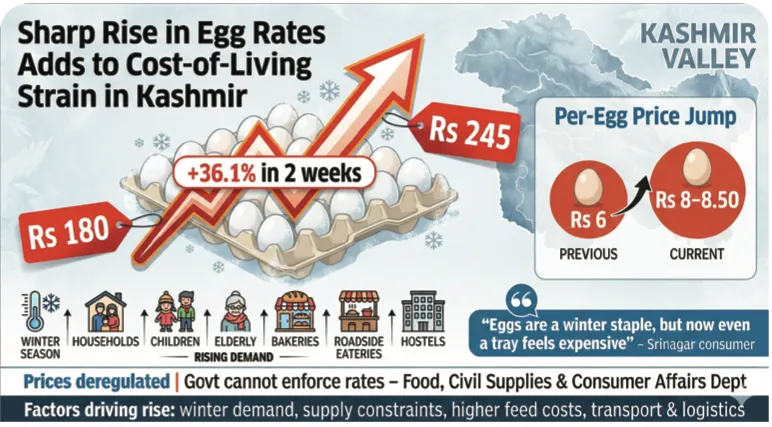






Srinagar, Dec 29: Egg prices in Kashmir have recorded a sharp spike over the past fortnight, intensifying cost-of-living pressures on households during the peak winter season.
Eggs are currently selling at around Rs 8 to Rs 8.50 per piece across most markets in the Valley, while a tray of 30 eggs is priced at Rs 245, compared to Rs 180 just two weeks ago. The increase of Rs 65 per tray amounts to a steep 36.1 percent rise in less than a month, traders said.
On a per-egg basis, prices have effectively climbed from nearly Rs 6 to over Rs 8, making what is considered a daily winter staple significantly costlier for consumers.
Residents say the hike has hit households hard at a time when eggs are viewed as an affordable and essential source of protein during the cold months. “Eggs are a staple in our homes in winter, especially for children and the elderly. Earlier, we could manage easily, but now even buying a tray feels expensive,” said Arshid Ahmad, a consumer from Srinagar’s downtown area.
Another resident from South Kashmir said families were already cutting back. “We have started buying fewer eggs. Everything becomes costlier in winter, but such a sudden rise is difficult to absorb,” he said.
Dealers attribute the surge to a seasonal spike in demand combined with supply constraints and rising input costs. Winter traditionally sees higher egg consumption in Kashmir due to cold weather, increased demand from roadside eateries, bakeries and institutional buyers such as hostels. However, traders said supplies from outside the Union Territory have failed to keep pace with demand, pushing prices upward.
Officials from the Food, Civil Supplies and Consumer Affairs Department said the government has limited scope for intervention. “ Egg prices have been deregulated, and therefore the government cannot enforce rates in the market,” an official said.
The spike in Kashmir reflects a broader national trend, with egg prices ruling high across several parts of the country this winter. Industry experts attribute the rise to higher poultry feed costs, including maize and soybean, and the shutdown of several small poultry units in recent years, which has reset baseline prices.
In Kashmir, heavy dependence on external supplies further escalates costs, as transportation charges and winter logistics are factored into retail pricing. With demand expected to remain strong through January, traders believe prices are likely to stay firm in the coming weeks.
For consumers in the Valley, the sharp rise has turned an everyday winter food into an expensive staple, with little immediate relief in sight as market dynamics continue to dictate prices.