

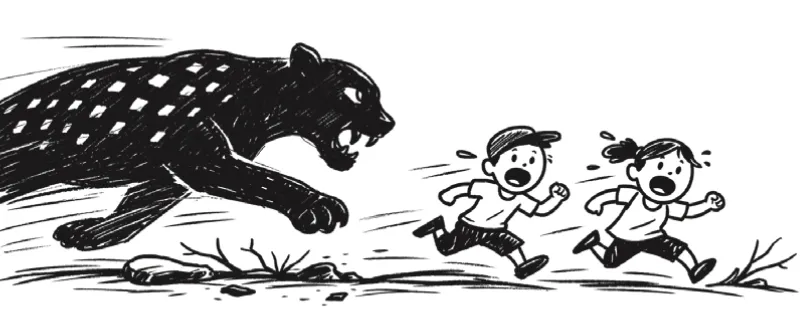






Srinagar, Dec 23: The forest has moved next door, and it is hunting.
As forests in Kashmir shrink and villages sprawl, leopards are no longer intruders but residents – turning orchards into cover, garbage into food, and children into unintended prey.
According to wildlife officials, the leopards roaming villages across Kashmir are no longer seasonal visitors driven downhill by snowfall but animals that have spent their entire lives alongside human settlements, adapting to orchards, woodlots, and garbage dumps for shelter and food.
“These incidents of man-animal conflict involving leopards that we see throughout the year are mostly caused by animals living in close proximity to humans,” Wildlife Warden for north Kashmir, Suhail Intesar, said. “They have adapted to man-made woodlots, orchards, and even abandoned houses, feeding on whatever is available – stray dogs or poorly secured livestock.”
The growing overlap between people and predators has had deadly consequences this autumn, particularly in south Kashmir, where at least three toddlers have been killed and several others injured in leopard attacks in recent months, triggering widespread fear.
The latest incident occurred on the evening of December 17, when a leopard attacked and killed five-year-old Sumiya, daughter of Riyaz Ahmad Paswal, in Ashdar Khiram village of Anantnag district.
Residents said the child stepped out of her house around 8:30 pm when the animal dragged her into nearby bushes before fleeing.
Earlier, on October 12, a seven-year-old boy, Muhammad Razak Bajad, was mauled to death by a leopard in Wupzan village of Bijbehara in Anantnag.
His father, Iqbal Bajad, a nomad from Reasi district, said the child was playing near their tent, which was pitched beside an orchard, when the leopard struck.
Wildlife officials say that many of the affected villages are located close to protected forest zones.
“Khiram falls on the fringe of the Tral Wildlife Sanctuary and is a recognised wildlife zone,” said Sajad Bhat, Wildlife Warden for Anantnag-Kulgam. “Habitat disturbance, deforestation, and the proximity of villages to forests have increased leopard movement.”
Bhat said leopards, unlike omnivorous bears, are strictly carnivorous, making attacks on humans and livestock more likely as their natural prey base shrinks.
“They are nocturnal animals and mostly attack at night,” he said. “We repeatedly appeal to residents to keep children indoors during late evening hours.”
Another fatal attack occurred on September 6, when a leopard killed five-year-old Tanzeela Jan from a nomadic Gujjar family in Gujjar Basti Midoora village of Tral in Pulwama district. Residents said the animal dragged the child into a nearby forest, and her body was recovered hours later after an extensive search.
Leopards have also increasingly targeted livestock.
On the night of December 18, a leopard entered a sheep shed in Shiva village on the outskirts of Sopore in north Kashmir, killing at least seven sheep and injuring seven others. The shed belonged to Showket Ahmad Dar.
“In the past, leopards would descend into villages mainly after heavy snowfall in the upper reaches,” Intesar said. “Now, irrespective of the weather, they are seen roaming human habitations.” Wildlife officials warn that unless habitat loss and poor waste management are addressed, Human-Wildlife Conflict in Kashmir is likely to intensify.
“These are not isolated cases,” a senior Wildlife Department official said. “We are witnessing a disturbing rise in such conflicts every year.”