

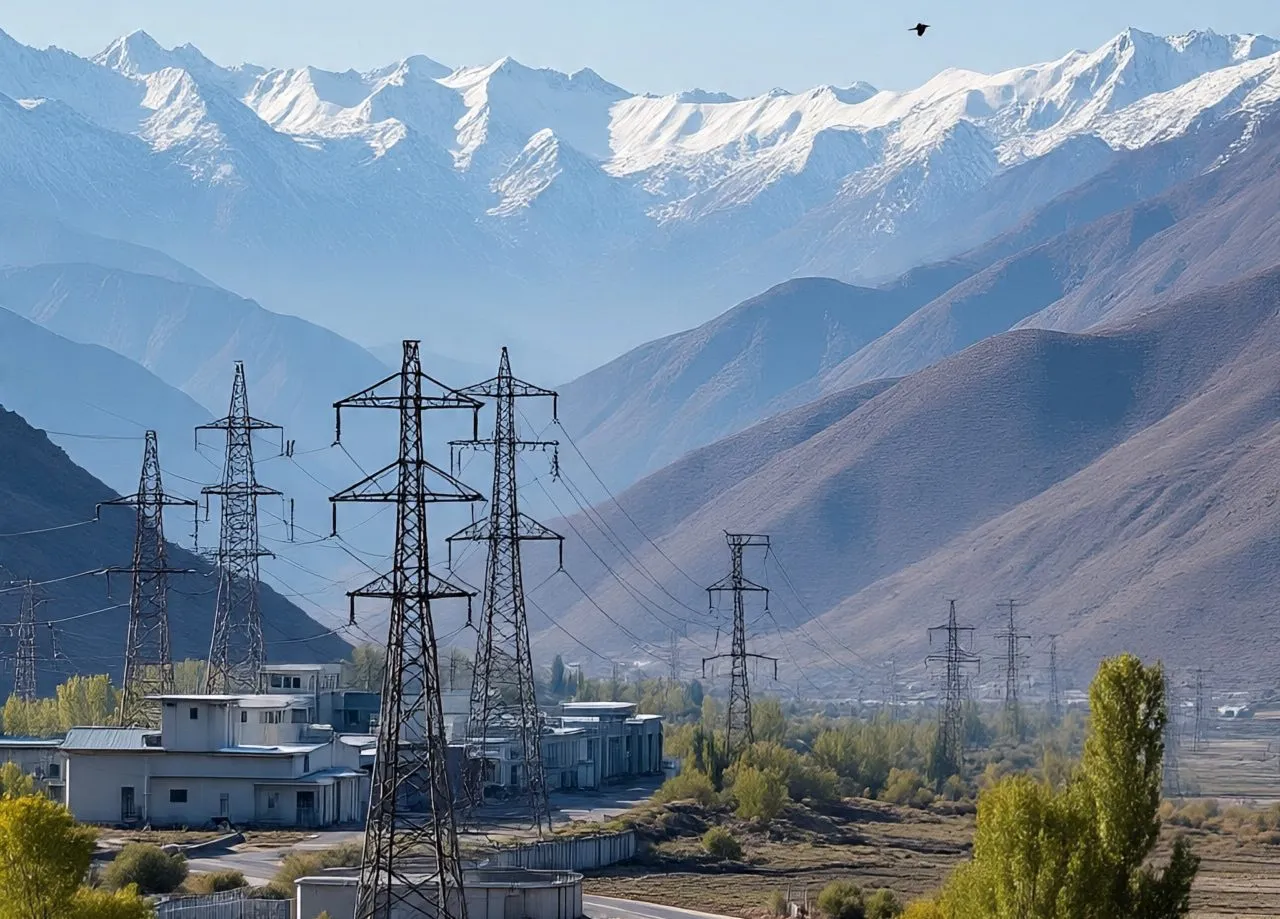






Srinagar, Dec 28: Jammu and Kashmir’s power sector is confronting a severe financial crisis with a projected revenue gap exceeding Rs 4,200 crore for FY 2025-26, driven by a dip in local electricity generation and soaring import costs.
The region’s power generation from locally-owned and NHPC-operated hydroelectric plants has crashed by approximately 70 percent due to less water discharge from rivers, forcing authorities to import an estimated 3,000 MW of expensive electricity from outside distribution companies.
This dramatic shift from affordable local hydro-power to costly external purchases has created an unsustainable financial burden on the Union Territory’s power infrastructure.
Power purchase costs, including transmission charges, now constitute the single largest expense at Rs 5,924.15 crore for FY 2025-26—up from Rs 5,620.88 crore in the current fiscal and representing 87 percent of total revenue requirements.
The department’s Annual Performance Review for FY 2024-25 and Aggregate Revenue Requirement for FY 2025-26 projects total revenue requirements at Rs 6,827.18 crore. However, revenue realisable at existing tariffs—even assuming 93 percent collection efficiency—stands at merely Rs 2,688.99 crore, leaving a gap of Rs 4,136.03 crore.
“The revenue gap remains a serious concern for the power sector in Jammu and Kashmir,” a senior KPDCL official stated. “Despite our efforts to improve operational efficiency and reduce losses, the rising cost of power purchase and inadequate cost recovery through existing tariffs continue to put tremendous pressure on the system. We are working on multiple fronts—reducing AT&C losses, improving collection efficiency, and optimising power purchase—but the scale of the challenge requires sustained policy support and consumer cooperation.”
Distribution losses remain among India’s worst, projected to decline only marginally from 47.79 percent to 46.41 percent in FY 2025-26—nearly three times the national average of 15-20 percent. This means that for every 100 units purchased, fewer than 54 units are actually billed and collected, with the remainder lost to technical inefficiencies, theft, and billing gaps.
The collapse in local generation stems from multiple factors, including severe seasonal water flow variations, prolonged maintenance shutdowns at key generating stations, ageing infrastructure, and reduced water availability due to changing precipitation patterns. Several planned capacity additions have also faced delays due to environmental clearances and funding constraints.
Despite financial stress, the department has proposed capital expenditure of Rs 519.10 crore for FY 2025-26—up from Rs 330.67 crore previously—focusing on network strengthening, smart meter implementation, and IT infrastructure upgrades. Operation and maintenance expenses are projected at Rs 713.76 crore, with employee costs alone accounting for Rs 648.58 crore.
The petition is currently under review by the Joint Electricity Regulatory Commission, which must balance consumer affordability against the utilities’ financial sustainability. Without significant tariff rationalisation, aggressive loss reduction, or substantial government subsidies, experts warn that the crisis threatens the region’s power supply reliability and broader economic development prospects.