

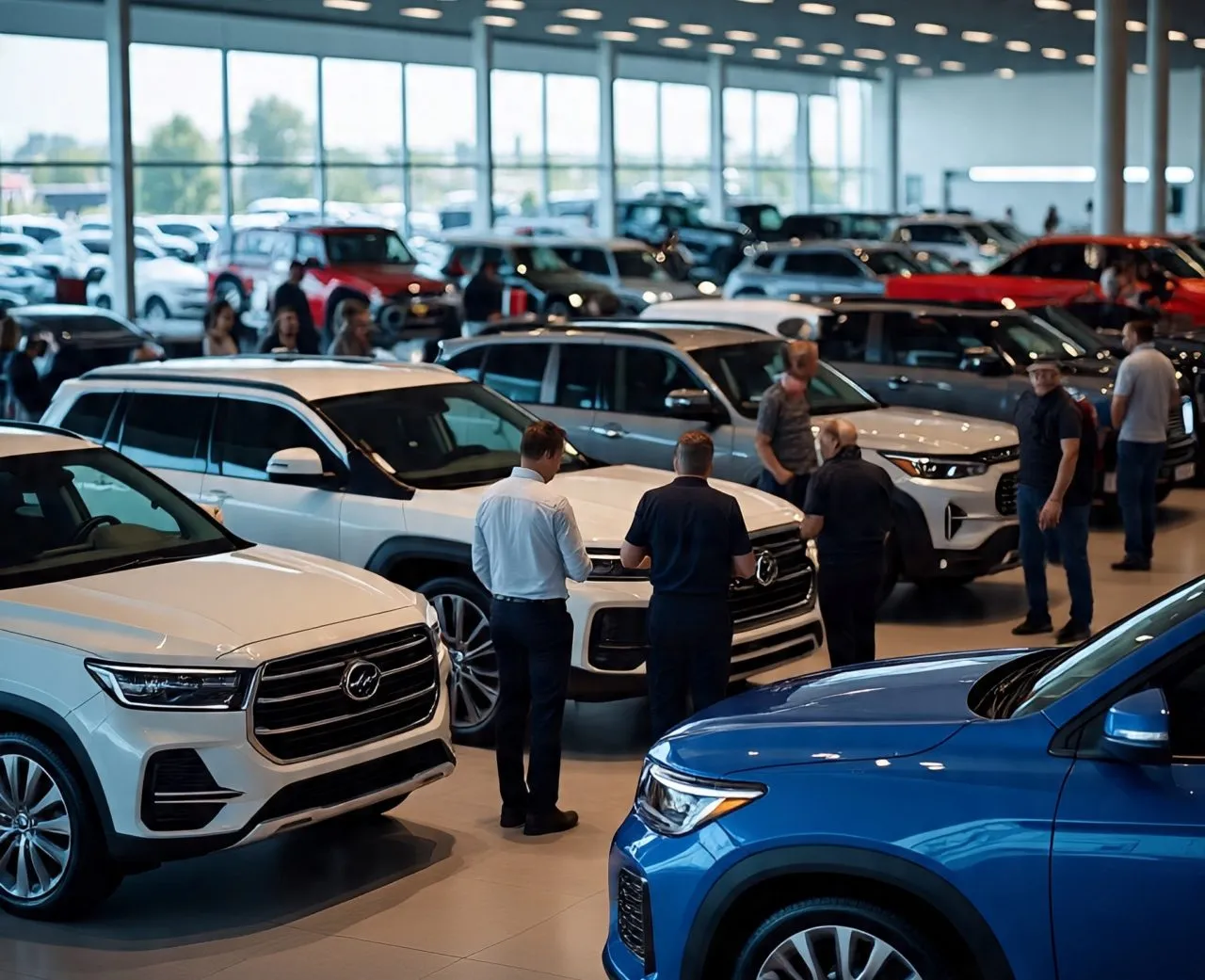






Srinagar, Dec 31: In Kashmir’s retail market, where several sectors are finding it difficult to remain competitive as well as profitable, the automobile sector, primarily driven by robust car sales, witnessed a steady growth momentum during the year 2025.
Automobile dealers attribute the spurt in vehicle sales to the central government’s revised Goods and Services Tax (GST) brackets, which has largely seen the tax rate of small cars drop from the earlier 28 percent to a revised 18 percent existing rate.
The new GST regime, also referred to as GST 2.0, came into effect pan-India from September 22 this year, leaving a cascading impact on automotive sales.
Sample this: The growth in automobile sales in J&K stood at 11.42 percent, with the highest growth of 28.78 percent recorded in commercial vehicles, while passenger sales growth was recorded at 15.75 percent.
However, GST 2.0 proved to be a game-changer for the growth story of automobile sales, which witnessed a two-fold increase.
Propelled by the price cut factored in by almost all the automobile dealers in the wake of GST rates, J&K recorded a sharp 25.35 percent growth in overall retail vehicle sales during October this year.
As per the data issued by the Federation of Automobile Dealers Association (FADA), the umbrella body for vehicle retail dealers across the country, the total vehicle sales of 27,466 in J&K during October 2025 were a 25.35 percent year-on-year growth as compared to 21,912 vehicles sold in J&K during October 2024.
Greater Kashmir spoke to representatives of several Kashmir-based car dealerships, who said, apart from rate cuts on new models, many of the dealerships had to sell the existing vehicle inventories at slashed prices.
Managing Director, Arise Hyundai, Omar Beigh, said the automobile sector witnessed a significant growth in Kashmir. He said post the GST reduction, there has been a spurt in sales, especially in the small segment cars.
“The hatchbacks or sedans, especially below 1.4 CC, saw a sharp decrease in GST rates from 28 percent to 18 percent. There used to be a levy of cess from around 1 percent to 3 percent, which has also been done away with. Overall, this led to a price reduction in cars by 11 per cent to 12 percent led by the GST benefit,” Beigh said.
He said the reduction in GST automatically translated into lesser car prices and subsequently lower insurance and registration charges.
“There has been a certain price benefit to customers for premium SUV segments. Earlier, these vehicles attracted 28 percent and cess of 17 percent, which was recalibrated to the present GST rate of 40 percent, but the cess in this segment was removed,” Beigh said.
He said the SUV segment has also seen a 5 percent price reduction for SUVs, adding that even the car finance companies have introduced lesser interest rates, which makes it more affordable to purchase a car on EMI. The GST rate cut on vehicles also helped to give a thrust to the automobile sector in Kashmir, which was hit by the subdued economic activity in the wake of the Pahalgam attack in April this year.
Chairperson, Federation of Automobile Dealers Associations (FADA), J&K Chapter, Sanjay Aggarwal, said, “October 2025 will be remembered as a landmark month for auto retail in J&K, where reforms, festivities, and rural resurgence came together to deliver record-breaking results.”
Jammu-based Aggarwal said that the introduction of GST 2.0 proved transformational – lowering small-car GST rates made vehicle ownership more attainable, especially for the cost-sensitive first-time buyer.
Earlier this year, commenting on the October sales trend, Managing Director, Jamkash Vehicleades (Kashmir) Pvt Ltd, Irfan Ahmad Narwaroo, told Greater Kashmir that the robust sales during October 2025 helped the auto sector in J&K overcome the sluggish market activity witnessed since May 2025 in the aftermath of the Pahalgam attack and the subsequent fragile situation that prevailed in the region.
“The GST rate cut, along with the schemes offered by the car dealerships, has helped the growth in sales. This has done a balancing act after we saw sales falling sharply in May and June,” Narwaroo said.
He said the over 40 day sales period during Navratri and Diwali, which witnesses sales almost doubling in the rest of the country, usually has no impact on auto sales in Kashmir. “This time around, the new GST rates became effective at the same time when the peak festive season was on in the rest of the country. With the launch of new models across brands, the auto sector in Jammu and Kashmir is hopeful to garner a further improvement in monthly sales,” he said.