

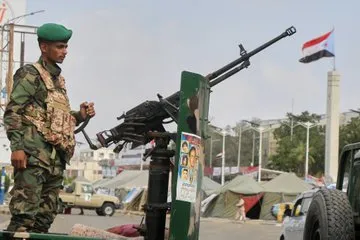






New Delhi, Jan 3: A decade after Saudi Arabia and the United Arab Emirates joined hands to fight Iran-backed forces in Yemen, the two powerful Arab allies are now on opposite sides of the same conflict. What began as a united military campaign has turned into an open and rare public confrontation, raising fears of further instability in an already war-torn country. According to CNN, tensions flared sharply this week after Saudi Arabia carried out airstrikes on a shipment of combat vehicles in Yemen’s southern port city of Mukalla, alleging that the cargo was linked to the UAE and posed a threat to Saudi national security.
Riyadh accused Abu Dhabi of taking “highly dangerous” actions, marking an unprecedented escalation between the two long-time partners.
Yemen’s civil war started in 2014 when the Houthis, backed by Iran, seized control of the capital Sana’a and much of northern Yemen. The Houthis belong to a Shiite Islamist group known as Ansar Allah. With Iranian weapons and support, they grew into Yemen’s strongest military force. Alarmed by Iran’s growing influence on its southern border, Saudi Arabia, along with the UAE, launched a military intervention in 2015 to restore Yemen’s internationally recognised government. At that time, both countries shared the same goal: defeat the Houthis and stabilise Yemen. However, the war dragged on. Despite years of airstrikes, blockades and ground fighting, the Houthis survived and even strengthened their position. By 2022, the conflict had settled into an uneasy truce.
Over time, Yemen fractured into several power centres. The Houthis, backed by Iran, control most of northern Yemen, including Sana’a and key Red Sea coastlines. According to CNN, they have launched missile and drone attacks on Saudi Arabia and even Israel, making them one of Iran’s most effective regional allies. The Yemeni government, backed mainly by Saudi Arabia, operates through a Presidential Leadership Council formed in 2022. It controls parts of central and southern Yemen with the help of tribal militias and army units.
The Southern Transitional Council (STC), backed by the UAE, controls large parts of southern Yemen. The group wants to revive an independent South Yemen, which existed until 1990. Saudi Arabia wants a united Yemen that is stable and friendly along its border. The UAE, however, supports southern separatists who want Yemen split into two countries. According to CNN, this difference in goals led both countries to back rival forces on the ground, sometimes fighting the Houthis, and at other times clashing with each other’s allies.
In early December, UAE-backed southern forces launched a fast military push and seized oil-rich areas, at times from Saudi-backed units. This led to deadly clashes and rising mistrust. Tensions peaked when Saudi airstrikes hit what it said was a UAE-linked shipment in Mukalla. Shortly after, the UAE announced that it had withdrawn its forces from Yemen. A UAE official told CNN, “Over the past decade, the UAE acted at the request of the legitimate Yemeni government and Saudi Arabia… particularly in confronting terrorist organizations.” The official said Abu Dhabi decided to withdraw to promote calm and de-escalation.
Despite the UAE’s withdrawal claim, fighting has continued. CNN reported that Saudi Arabia deployed naval forces off Yemen’s coast after Saudi-backed troops launched what they described as a “peaceful” operation to retake areas from southern separatists. The separatists rejected that claim, accused Saudi Arabia of deception, and called the conflict a “north-south war.” They also alleged Saudi airstrikes on their positions. claims Riyadh has not commented on. The STC later announced plans to hold a referendum on southern independence within two years.
Yemen has long suffered from internal divisions. North and South Yemen were separate countries for decades before uniting in 1990. A civil war in 1994 defeated southern forces but left deep resentment that still fuels conflict today. According to CNN, repeated wars have left Yemen extremely poor, heavily armed and unstable, despite its strategic location near key global shipping routes. Analysts warn that the growing rift between Saudi Arabia and the UAE only benefits the Houthis. The political observers say that the current situation marks a dangerous turning point and raises serious questions about regional stability and how Western nations will respond to tensions between two of their key Middle East partners. For Yemen, already battered by years of war, hunger and displacement, the Saudi-UAE faceoff risks pushing the country deeper into chaos, with no clear end in sight.