

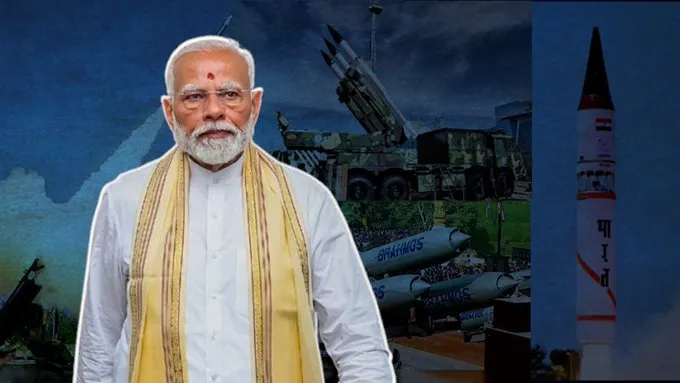






India’s defence modernisation has often followed when there has been some trauma or disturbance. For example, the India-China war in 1962 forced New Delhi to confront uncomfortable truths about preparedness, doctrine, and political complacency. The results were visible within a decade: a rearmed, reorganised Indian force that prevailed against Pakistan in 1965 and decisively in the 1971 war, despite Islamabad’s backing from Washington and much of the Islamic world. Post Kargil war, India went from strength to strength to advance into their high-altitude warfare capabilities and also develop strengths to fight a hybrid war situation.
History often repeats itself, though today it does so through technology rather than traditional battles. The terrorist attack in Pahalgam and India’s response through Operation Sindoor did not lead to a full-scale war. Instead, it led to a major change that was already underway, a transformation of India’s defence thinking, military preparedness and defence manufacturing. Since then, New Delhi has moved unusually fast in 2025 to strengthen its armed forces on land, at sea, in the air, and in newer areas such as cyber and space. The focus is no longer on past wars, but on future conflicts that may involve a mix of conventional fighting, cyber-attacks, terrorism, and information warfare.
India’s security challenges are now far more complicated. China and Pakistan, both nuclear-armed, remain adversaries. Modern conflicts increasingly involve cyber-attacks, fake news, economic pressure, and proxy terrorism. At the same time, political instability in Bangladesh, growing anti-India voices, and Nepal’s closer engagement with China have added pressure along India’s eastern and northern borders. In this situation, upgrading the military is no longer optional; it is crucial and essential.
India’s military strength once depended largely on the number of soldiers. That advantage is slowly fading. Today, technology matters more than sheer numbers. Recognising this, India is shifting towards faster, more precise, and controlled automated weapons and systems. One of the biggest strengths of India today is its indigenous missile development. Tests of Agni ballistic missiles have improved their range and survivability. Short-range systems like Pralay and longer-range versions of BrahMos have strengthened India’s ability to deter threats, especially along borders with China and Pakistan. The focus is on accuracy and speed, making it harder for enemies to defend themselves. India’s nuclear deterrent has also quietly become stronger. With land-based missiles, much advanced aircraft-delivery weapons systems and submarines, India now has a complete nuclear triad. Arihant-class submarines patrol the Indian Ocean, ensuring that India can respond even after a first strike by an enemy. However, the biggest change is happening in newer technologies such as artificial intelligence.
Wars of the future
Indian defence planners now believe future wars will rely heavily on technology and data. Since Operation Sindoor, the use of artificial intelligence in defence has increased rapidly. The military is deploying surveillance drones, unmanned vehicles, loitering munitions, and AI-based command systems. The armed forces are also testing drone swarms for border monitoring and precision attacks, with a caveat that no mistake or error should happen. These systems are cheaper, harder to stop and carry less political risk than sending pilots or soldiers. With several defence corridors emerging in the country, the government initiatives are helping private technology companies work more closely with the military. It helps reduce long-standing delays in defence procurement. India has also expanded its cyber warfare capabilities. While land borders pose immediate threats, challenges at sea are long-term. China’s continuing camouflaged growing naval presence in the Indian Ocean through ports, bases and deployments has forced India to strengthen its navy. After Pahalgam, shipbuilding picked up pace. New frigates, destroyers, and stealth warships, which were already in the pipeline, are being inducted, mostly designed and built in India. The Navy is preparing for longer operations far from shore.
The other big achievements are aircraft carriers that remain central to India’s sea strategy. With India’s regal INS Vikrant now operational and discussions on a third carrier underway, India aims to maintain control in its surrounding sea waters more strongly and confidently. Submarine development has also become urgent as Chinese submarines increase their presence in the Indian Ocean. Beyond warfare, the navy now plays a diplomatic role, conducting joint exercises, humanitarian missions, and patrols, reinforcing India’s image as a key security provider in the region.
Air power and space strength
India’s air force is now seen as a frontline power that proved and tested its capabilities in Operation Sindoor, even though the Air Force has been under pressure for years. With new fighter aircrafts being inducted, and support systems such as airborne warning planes and long-range air defence systems being improved, this leads to more reach and safety of the air force. Indian-made defence projects, though sometimes delayed, are finally delivering results. Future fighter aircraft and drones are being designed with next-generation warfare in mind. In modern warfare, with changing communication tools, space has quietly become a key area of military strength. India has expanded its use of satellites for surveillance, navigation, and secure communication. Dedicated military satellites now provide real-time information for monitoring and targeting. India has also demonstrated anti-satellite weapon capability, signalling that it does not want to be vulnerable in space. The creation of separate space and cyber commands shows that the government understands modern wars begin much earlier than actual fighting, often in cyberspace and orbit.
This shift is also reflected in recent defence purchases for urgent military modernisation. In late December, the Defence Acquisition Council, chaired by Defence Minister Rajnath Singh, approved defence purchases worth about ₹79,000 crore. The army received much-awaited approval for loitering munitions, advanced radars, long-range rockets for the Pinaka artillery system, and improved systems to detect and stop hostile drones. These decisions are based on major efforts by the Defence Minister and his team that work closely with the experts and different departments, bringing more cohesion between private players and the government. In addition, lessons learnt from recent wars and conflicts, where drones and precision weapons have changed how battles are fought. For the navy, approvals included support ships, secure communication systems, and the leasing of long-endurance drones to improve surveillance across the Indian Ocean. The air force was cleared to acquire Astra Mk-II air-to-air missiles, precision-guided bomb kits, advanced training simulators, and improved safety systems.
One of the biggest changes, however, is happening outside the armed forces. Defence manufacturing in India, once known for delays and heavy dependence on imports, is becoming a key part of the country’s industrial growth. Defence exports are rising, and private companies are now competing alongside government-owned firms. Weapons, armoured vehicles, drones, and electronic warfare systems are increasingly being made in India, thus leading to self-reliance. Global crises have shown how risky it is to depend on foreign suppliers. By building its own defence industry, India reduces this risk while creating a system that can quickly adapt to new threats.
However, challenges remain that need to be overcome. It still needs more quick decision-making; all services need to further collaborate and work together. China’s military modernisation is faster and more advanced, while Pakistan’s use of asymmetric tactics and non-state actors remains a concern. Even so, the direction is clear. After the 1962 war, India responded to the crisis not with panic, but with long-term change. Defence is no longer just a protective wall at the border. It is a living system that continues to develop and change with the latest inventions in technology, industry, diplomacy, and deterrence. In a world where conflicts increasingly happen in hidden and grey areas, India is betting that strong preparation, not aggression, is the best way to keep peace. History shows that countries that modernise early, quietly, and steadily are often the ones least likely to be challenged.
Surinder Singh Oberoi,
National Editor Greater Kashmir