







The year that has just passed will remain etched in the public memory of Jammu and Kashmir as one of prolonged distress and collective anxiety. It was a year in which the grammar of everyday life was repeatedly disrupted — first by the shadow of war, and later by the fury of nature.
For many in the J&K, war was not a distant geopolitical contest but an immediate and lived experience. The sight of drones overhead, the sound of shelling across the Line of Control, and the unrelenting tension in border districts such as Poonch and Rajouri brought home once again how fragile normalcy remains. Lives were displaced, homes were damaged, and entire communities were forced to negotiate survival under conditions of permanent vulnerability.
Nature then compounded this suffering. Unprecedented and incessant rains triggered floods across large parts of Jammu and Kashmir, destroying crops, washing away infrastructure, and damaging thousands of homes. Economic distress deepened, and psychological exhaustion became a shared condition.
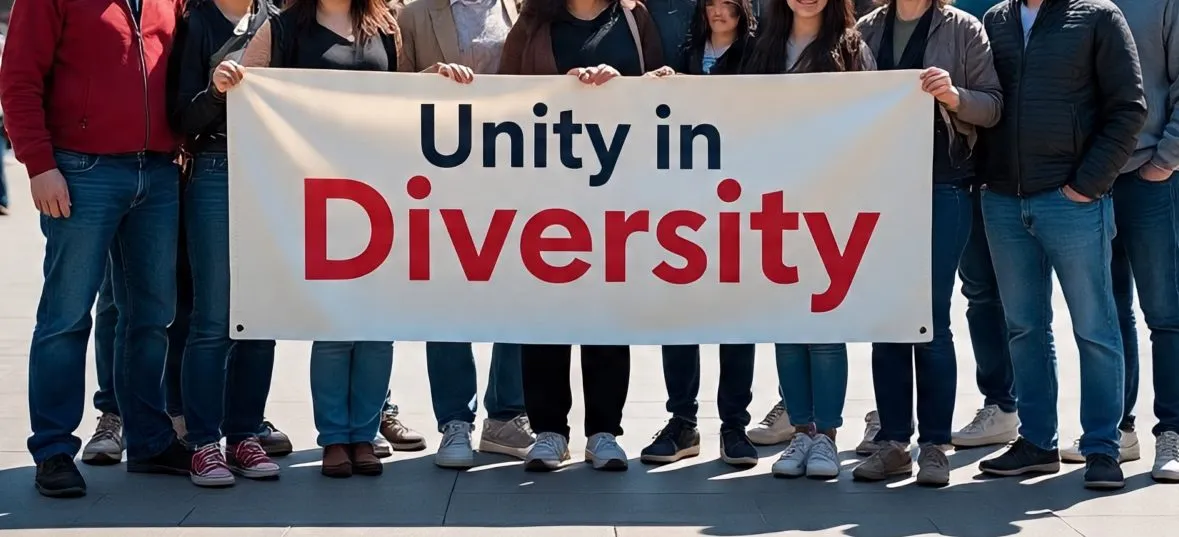
Yet 2025 should not be remembered merely as a year of hardship. It deserves to be recalled as a year in which society in Jammu and Kashmir asserted its moral and civic boundaries with uncommon clarity — rising above narrow parochial and communal lines to affirm its ethical core and civic conscience. Across both the Jammu region and the Kashmir Valley, there was a visible and deliberate transcendence of parochial loyalties and communal divisions, expressed through acts of empathy, solidarity and shared responsibility.
The first such assertion came after the horrific terror attack in Pahalgam, where twenty-six men — mostly tourists — were singled out and executed in front of women and children after their religion was ascertained. While outrage swept across the country, the response within Kashmir was unprecedented in its scale, unity, and moral intensity.
Kashmiri society spoke in one voice. Political leaders across ideological divides, civil society groups, business communities, students, youth, and ordinary citizens condemned the attack without qualification. This was not the familiar, fragmented critique of militancy seen in the past. It was a total societal rejection. For the first time in the region’s long conflict, terrorism was not merely criticised — it was publicly disowned.
The collective declaration of “Not in our name” marked a decisive moral moment. Kashmiris refused to allow the atrocity to be associated with their society, their history, or their aspirations. Equally significant was the way the attack was interpreted locally: not as an assault on outsiders, but as an attack on Kashmir itself — on its economy, its social fabric, and its identity. The targeting of tourists violated an unwritten social compact that had long protected Kashmir’s fragile economic lifeline. But beyond economics, the communal logic of the killings struck at the deepest core of Kashmiri self-understanding. Many Kashmiris stated that this was not attack on tourists but on Kashmir, Kashmiri economy and Kashmiri people. While the decline in tourist footfall did have economic repercussions for Kashmiris, their response to the situation was shaped by more than just financial concerns. What they opposed was not merely the impact on their livelihoods, but the brutal nature of the attack and the communal logic that underpinned it. For many Kashmiris, it was perceived as an assault on their very identity.
Later in the year, a very different episode unfolded in Jammu — one that revealed the same moral instinct in another form. After the house of a Muslim journalist was bulldozed on the grounds of alleged encroachment, the region witnessed an extraordinary surge of public empathy that cut across religious lines. While political parties protested the action, what proved far more consequential was the response of ordinary citizens.
When a Hindu resident of Jammu, Kuldeep Sharma, publicly offered five marlas of his own land so that the journalist could rebuild his demolished home, the gesture triggered a wave of collective affirmation across the region. What began as an act of individual compassion soon acquired a deeper social meaning, reflecting not only inter-religious solidarity but also a rare moment of inter-regional bonding. A Kashmiri resident, deeply moved by Sharma’s generosity, responded by offering him an even larger plot of land in return — transforming a personal gesture into a shared moral statement. What ultimately unfolded was not simply an exchange of goodwill between individuals, but a powerful reaffirmation of shared citizenship in a deeply polarised time, one that transcended both religious and regional divides.
In a political environment increasingly shaped by identity anxieties, fear-laden narratives, and competitive victimhood, the Jammu episode emerged as a rare moment in which society reclaimed its moral agency. What unfolded was not merely an expression of individual empathy, but the reconstitution of social bonds — rooted in dignity, trust, and a shared sense of responsibility. By moving beyond the reflexes of communally reactive and regionally polarised politics, the incident brought into the open the latent capacity of society in Jammu and Kashmir to build bridges across divisions and to resist the polarisation that has come to be treated as an almost inevitable feature of the J&K’s political life.
Together, these two moments reveal the emergence of a renewed civic consciousness in Jammu and Kashmir. Beneath the headlines of conflict and disaster lies a society that continues to assert its humanity — through conscience, compassion, and courage. These responses do not erase the pain of war and disaster that defined the year 2025. But they offer something equally vital: a reminder that even in times of profound uncertainty, the people of J&K are shaping their history not only through endurance, but through ethical choice.
Rekha Chowdhary,
Retired Professor of Political Science.